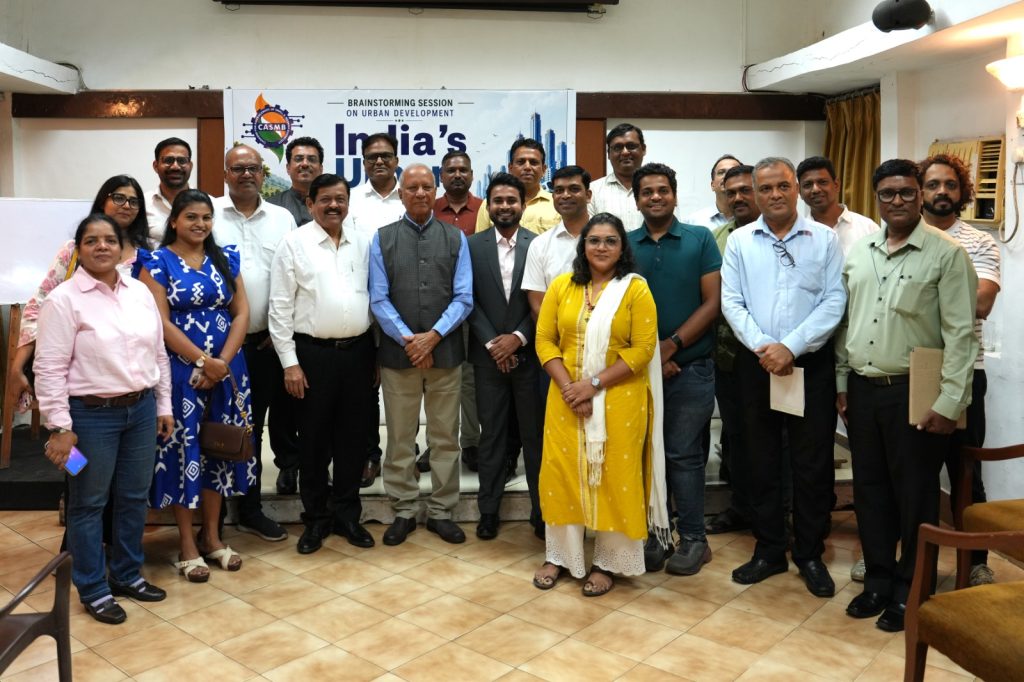
At a landmark CASMB brainstorming session in Mumbai, former IAS officer Nanasaheb Patil delivered a data-driven warning: India’s growth story is facing structural cracks that neither rupee stabilisation nor the reopening of the Strait of Hormuz will repair.
MUMBAI, JUNE 3, 2026
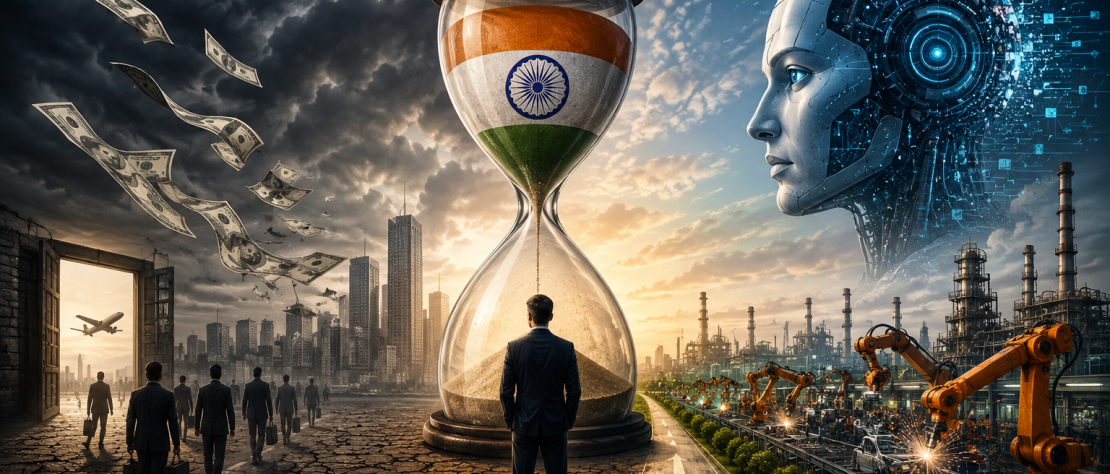
The numbers that framed the discussion at the Chamber for Advancement of Small and Medium Businesses (CASMB) brainstorming forum on India’s urban and economic future were not comfortable ones. India has slipped from the world’s third to the sixth largest economy in global rankings within a year. The rupee has fallen to historic lows. Foreign portfolio investors (FPIs) pulled out over ₹32,000 crore in May 2026 alone. Net FDI, once a $56 billion annual flow, has collapsed to virtual zero. And in the background, a polycrisis — geopolitical conflict, climate risk, the AI revolution, and China’s relentless manufacturing dominance — is reshaping the global economic order faster than India’s policy frameworks can respond.
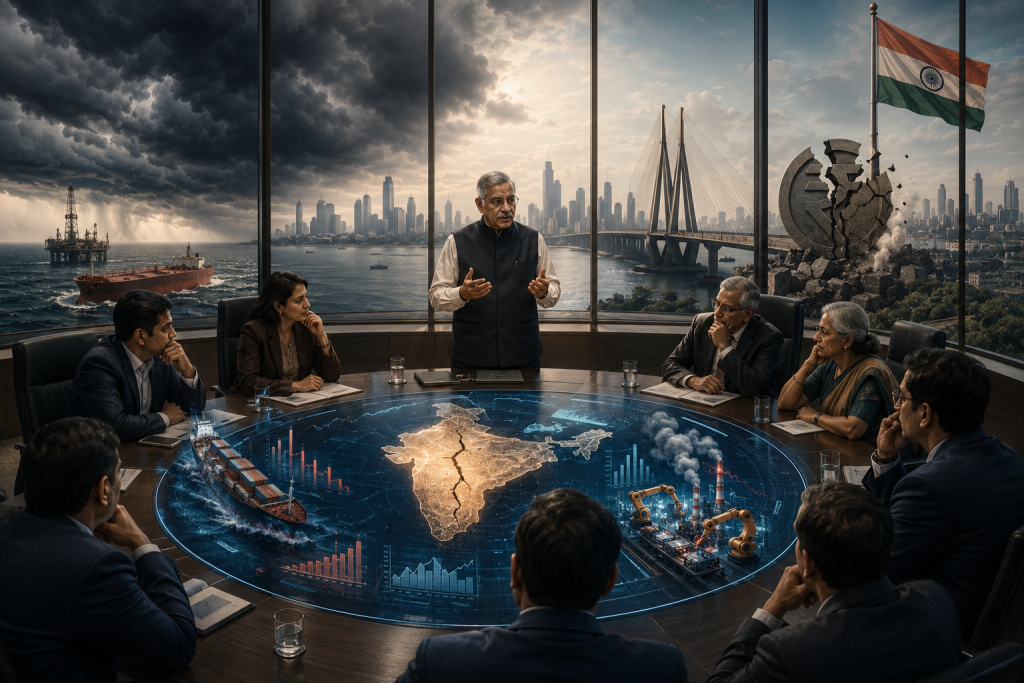
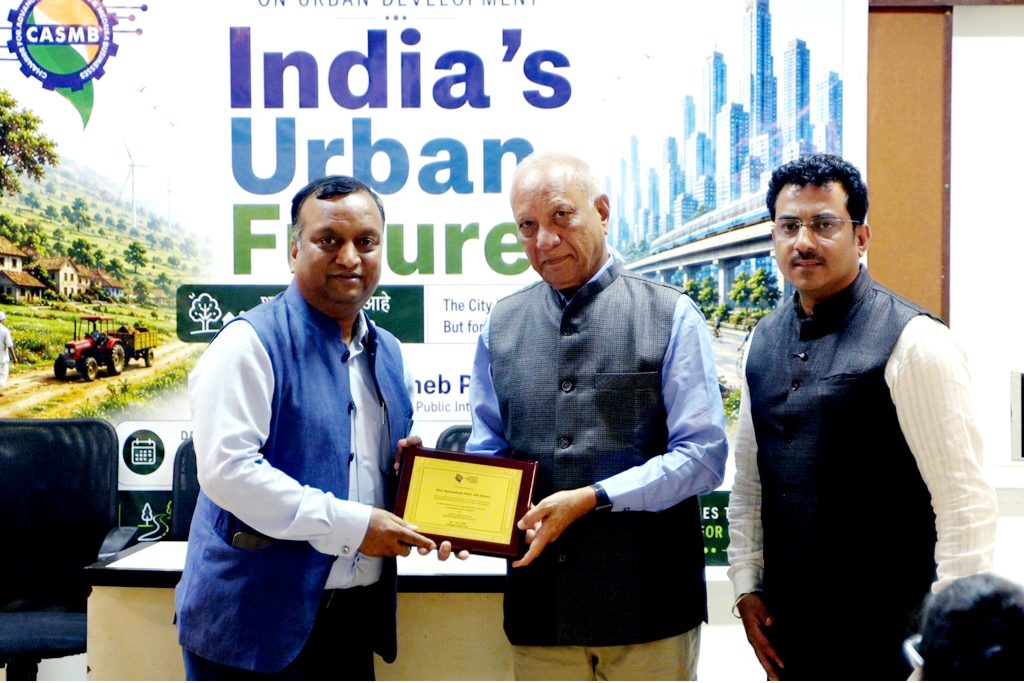
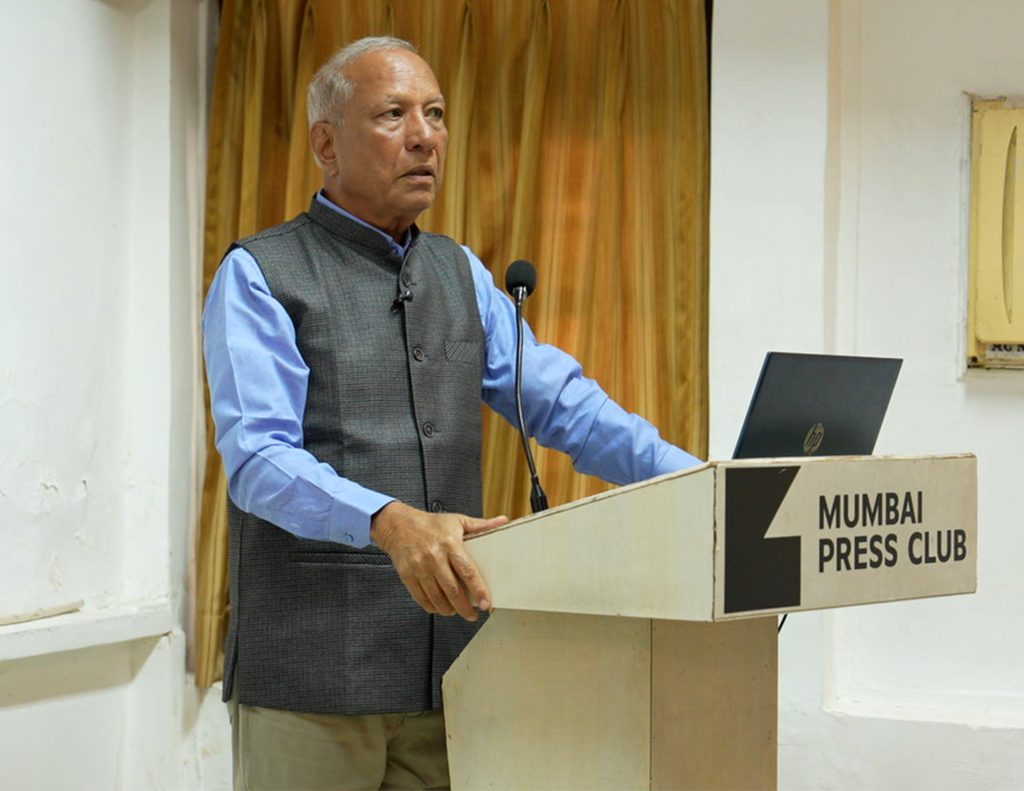
This was the setting for a three-hour intensive brainstorming session held at the Mumbai Press Club, guided by Shri Nanasaheb Patil, IAS (Retd.), former Additional Chief Secretary, Government of Maharashtra, and one of the country’s most rigorous policy analysts. The session, organised under the aegis of CASMB, brought together senior journalists, urban planners, researchers, MSME entrepreneurs, banking professionals and policy advocates to examine India’s economic trajectory with candour. The Polycrisis: What India Is Navigating Nanasaheb Patil opened with a diagnostic of what he termed the “global polycrisis.” Taiwan produces 70% of the world’s semiconductor chips. If China takes over Taiwan — a scenario that global security analysts no longer treat as remote — the consequences for India, Europe and the United States would be catastrophic. China’s monopoly over rare earth minerals, critical for everything from electric vehicles to defence systems, represents a strategic threat to India in the next ten years. The Strait of Hormuz, once a free seaway, is effectively becoming a toll road — raising the cost of oil, fertilisers, sulphur and circuit board materials. “These are not distant geopolitical events. They directly hit India’s import bill, our fertiliser supply chain, our electronics manufacturing inputs, and our energy costs. Every rupee of additional cost at these chokepoints is a tax on India’s manufacturing competitiveness.” — Shri Nanasaheb Patil, IAS (Retd.)
China’s Second Shock — And India’s Response Gap The presentation drew heavily on McKinsey Global Institute’s 2025 analysis and Harvard Growth Lab research to make a point that the room found uncomfortable: China is not merely competing with India. It is reconfiguring the global manufacturing order in ways that leave India as a bystander. China accounts for 27-29% of global manufacturing production. In 2025, its shipments of industrial inputs — chips, smartphone components, intermediate goods — rose by over $175 billion. China is the “factory of factories,” supplying the machinery and components that power manufacturing everywhere else. And it has demonstrated willingness to weaponise this dominance — as seen in its use of rare earth export controls. Against this backdrop, India’s manufacturing reality is stark. India accounts for just 2.9% of global factory output and 1.8% of goods exports — a share that has barely moved in two decades. Manufacturing contributes just 13% of India’s GDP, against 25-32% in East Asian economies that achieved miracle growth. “India’s R&D spending as a percentage of GDP is one-fourth of China’s. In absolute terms, India spends one-sixteenth of what China spends on R&D. Only 35% of India’s national R&D is done by the commercial non-government sector, versus 75% in China. That is the structural explanation for the manufacturing gap — and it is a policy choice, not a fate.” — Vijay Gaikwad, Senior Journalist & Policy Analyst
The AI Threat to India’s IT Engine For decades, India’s IT services sector — generating over $254 billion in annual exports and employing 5.4 million professionals — has been the country’s principal foreign exchange earner. The session’s analysis offered a sobering picture. Agentic AI systems deployed by Anthropic, OpenAI, Google and Microsoft are now capable of autonomously writing code, managing workflows, processing claims and running structured business processes — which is precisely what the bulk of India’s IT sector exports. NITI Aayog’s own projections suggest that tech-sector headcount could fall from 7.5 million to 6 million by 2031. India’s data centres, as currently conceived, will largely channel cheap solar energy into running AI models built elsewhere. The tokens minted at home will power Western coding agents, eroding the pricing power of Indian outsourcing companies. The Korean semiconductor industry is in an unprecedented wage boom while six million Indian programmers face structural displacement.
The Manufacturing Imperative: Five Strategic Priorities The session’s most policy-dense segment outlined a strategic manufacturing agenda: A global value chain taskforce must identify and pursue the top 20 global firms across priority sectors — electronics, EVs, semiconductors, defence, chemicals and medical devices — with bespoke incentives and 90-day decision cycles. Import bottlenecks must be eased. High tariffs on base metals, specialty chemicals and capital goods price downstream exporters out of global markets. “GIFT City” frameworks for manufacturing must be replicated — where land is pre-acquired, utility connections are in place, and genuinely single-window clearances operate. PLI 2.0 — more ambitious, simpler, with fewer sectors pursued with greater depth, measurable quarterly milestones and full accountability. Electricity cross-subsidisation must be tackled to ensure Indian companies have access to reliable power at globally competitive rates. The Urban Dimension India’s urban population will cross 600 million by 2036. Mumbai alone absorbs 300,000 migrants annually. Urban centres will determine India’s growth trajectory over the next 25 years. Yet governance, infrastructure and planning remain catastrophically misaligned with this reality. “Economic concentration and urbanisation are not problems to be managed. They are the mechanism through which nations become wealthy. The question is whether India can design urban systems that capture the productivity gains of agglomeration rather than simply absorbing the costs of density.” — Shri Nanasaheb Patil, IAS (Retd.) McKinsey’s 18 Arenas — India’s $2 Trillion Opportunity McKinsey Global Institute identifies 18 high-growth “arenas” that could generate $1.7-2 trillion in revenues for India by 2030 and capture 30% of incremental GDP by 2040 — spanning semiconductors, industrial electronics, robotics, nuclear energy, renewable energy with storage, EVs and batteries, medical devices, biopharma, aerospace and defence, data centres, cloud services, and advanced manufacturing.
“The India of 2047 can be one of the most powerful economic platforms in the world. But that requires intellectual frameworks developed now, policy decisions made in the next decade, and institutional investments sustained over a generation. The conversation we had today must become policy. India’s idea deficit is as dangerous as its capital deficit.” — Shri Nanasaheb Patil, IAS (Retd.) This brainstorming session was organised by CASMB — Chamber for Advancement of Small and Medium Businesses.