

“Reduce the Burden on Agriculture, Boost Industry and Exports — Nanasaheb Patil’s Eight-Point Agenda”
स्वामीनाथन स्मृती व्याख्यान: चीन-बांगलादेश मॉडेल, APMC सुधारणा व खत सुरक्षिततेवर ठोस भूमिका Swaminathan Memorial Lecture: Firm stand on China-Bangladesh model, APMC reforms and fertiliser security
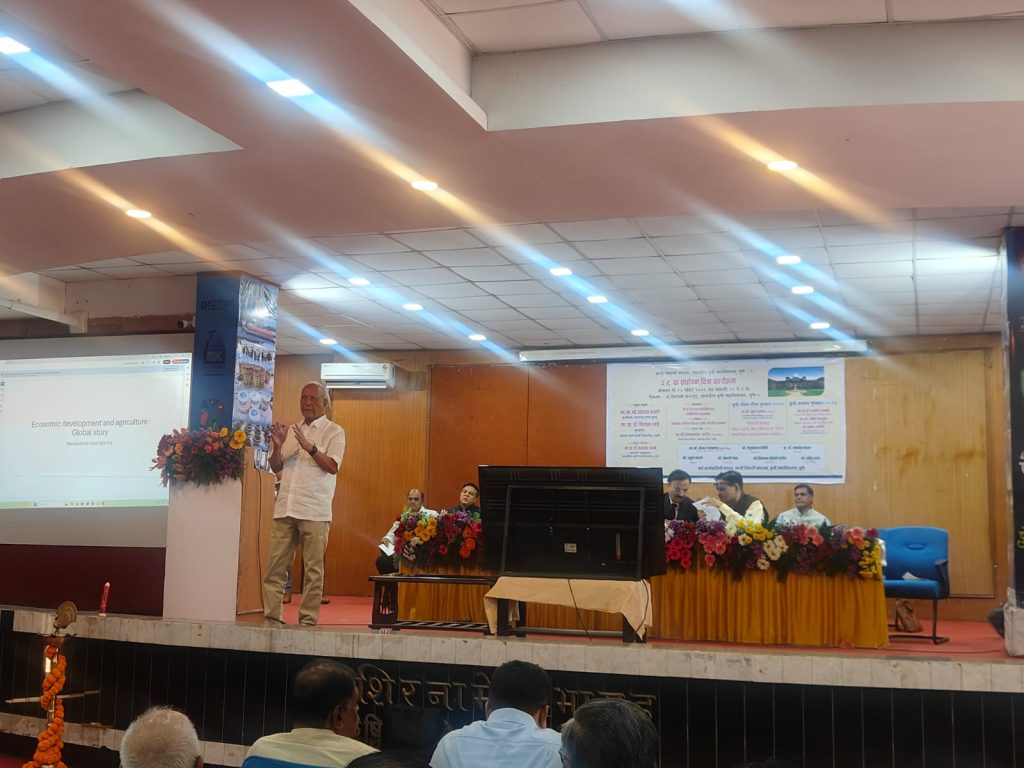
पुणे: शेतीवर अवलंबून असलेल्या ४२ टक्के लोकसंख्येला पर्यायी रोजगार देण्याशिवाय शेतकऱ्यांची परिस्थिती सुधारणार नाही, असे स्पष्ट मत डॉ. एम. एस. स्वामीनाथन स्मृती व्याख्यानात भारतीय प्रशासन सेवेचे (नि.) श्री. नानासाहेब पाटील यांनी व्यक्त केले.
Pune: Without providing alternative employment to the 42 percent of the population dependent on agriculture, the condition of farmers will not improve — this was the clear view expressed by Shri. Nanasaheb Patil, IAS (Retd.), at the Dr. M. S. Swaminathan Memorial Lecture.
पुणे कृषी महाविद्यालयात माजी विद्यार्थी संघटनेच्या स्थापना दिन कार्यक्रमाच्या निमित्ताने आयोजित या व्याख्यानात पाटील यांनी भारतातील शेती क्षेत्रातील संरचनात्मक संकटावर सखोल भाष्य केले. हार्वर्ड विद्यापीठातील नोबेल विजेत्या अर्थतज्ज्ञांसोबत काम केल्यानंतर त्यांनी चीन आणि दक्षिण कोरियाचा प्रत्यक्ष दौरा केला. त्या अनुभवाच्या आधारे ते बोलत होते.
The lecture was organised at Pune Agricultural College on the occasion of the Alumni Association’s Foundation Day. Patil spoke on the basis of his experience after working with Nobel Prize-winning economists at Harvard University and personally visiting China and South Korea.
“जगातील कुठल्याच देशाची प्रगती केवळ शेतीवर झालेली नाही. शेतीवरील अतिरिक्त लोकसंख्येचा बोजा कमी करण्यासाठी मॅन्युफॅक्चरिंग आणि निर्यात उद्योगांचे जाळे देशभर उभारणे ही काळाची गरज आहे.”
“No country in the world has achieved progress through agriculture alone. Building a nationwide network of manufacturing and export industries to reduce the excess population burden on agriculture is the need of the hour.”
एमएसपीत वार्षिक २०% वाढ — चीनचा धडा
20% Annual MSP Hike — A Lesson from China
चीनने शेतीतून औद्योगिक विकासाकडे वाटचाल करताना दरवर्षी किमान आधारभूत किंमत (एमएसपी) वीस टक्क्यांनी वाढवण्याचे धोरण स्वीकारले होते. त्याचवेळी प्रत्येक गावात शेतीसोबत एक उद्योग उभा केला — ‘टाऊन अँड कंट्री’ हे त्यांचे विकासाचे सूत्र होते. १९७८ ते १९९२ या अवघ्या चौदा वर्षांत २२ कोटी लोकांना शेतीतून बाहेर काढून पर्यायी रोजगार दिला गेला. आज आपल्या दुकानांमध्ये चीन आणि व्हिएतनामची उत्पादनेच दिसतात — हे त्याचेच फळ आहे.
While transitioning from agriculture to industrial development, China adopted a policy of increasing the Minimum Support Price (MSP) by twenty percent every year. Simultaneously, one industry was established alongside farming in every village — ‘Town and Country’ was their formula for development. In just fourteen years, from 1978 to 1992, 22 crore people were moved out of agriculture and given alternative employment. Today, only Chinese and Vietnamese products are seen in our shops — this is the result of that effort.
एपीएमसी — शेतकऱ्यांच्या शोषणाचे साधन
APMC — An Instrument of Farmer Exploitation
कृषी उत्पन्न बाजार समिती (एपीएमसी) ही व्यवस्था शेतकऱ्यांच्या विकासासाठी नव्हे, तर त्यांच्या शोषणासाठी तयार झाल्याचे पाटील यांनी सांगितले. सह्याद्री फार्म्ससारखे शेतकरी उत्पादक संस्थांचे (एफपीओ) मॉडेल विस्तारित करणे ही तातडीची गरज असल्याचे त्यांनी नमूद केले.
The Agricultural Produce Market Committee (APMC) system was created not for the development of farmers, but for their exploitation, said Patil. He stressed that expanding the Farmer Producer Organisation (FPO) model — like that of Sahyadri Farms — is an urgent need.
“तीन शेती कायदे मागे घ्यायला नको होते. ते स्वीकारले असते तर शेती क्षेत्रात मोठ्या सुधारणा झाल्या असत्या.”
“The three farm laws should not have been withdrawn. Had they been accepted, major reforms would have taken place in the agriculture sector.”
खतांचा पुरवठा धोक्यात — शेतीपुढे गंभीर संकट
Fertiliser Supply Under Threat — A Serious Crisis for Agriculture
इराणमधील गॅस आणि खत उत्पादन कारखाना युद्धामुळे बंद पडल्याने २०३५ पर्यंत भारताला गॅस पुरवठ्याचा प्रश्न निर्माण होण्याची शक्यता आहे. रॉक फॉस्फेटमध्ये मोरोक्कोचा ४०% वाटा असून काही खते बेलारूस व कॅनडामधून येतात. लाल समुद्रातील व्यापार मार्ग बंद होण्याचा धोकाही कायम आहे. या भू-राजकीय अस्थिरतेमुळे खतांच्या किमती वाढणे आणि उपलब्धता कमी होणे या दोन्ही संकटांना शेतकऱ्यांना सामोरे जावे लागू शकते, असे पाटील यांनी सांगितले.
With Iran’s gas and fertiliser production factory shut down due to war, India may face a gas supply problem until 2035. Morocco accounts for 40% of rock phosphate supply, while some fertilisers come from Belarus and Canada. The risk of trade routes through the Red Sea being blocked also remains. Due to this geopolitical instability, farmers may have to face both rising fertiliser prices and reduced availability, warned Patil.
धोरणसातत्याचा अभाव — इथेनॉल उदाहरण
Lack of Policy Continuity — The Ethanol Example
ऊस, मका आणि आता तांदळापासून इथेनॉल — असे सतत बदलणारे धोरण शेतकऱ्यांच्या नियोजनाचा आधार उद्ध्वस्त करते. कापूस व तुरीसाठी पावसाचे दिवस आणि ओलावा महत्त्वाचा असताना त्याबद्दल शासन गंभीर नसल्याची खंत त्यांनी व्यक्त केली. सोयाबीन हे पीक आता केवळ सोयाकेकसाठी कच्चा माल झाल्याने शेतकऱ्यांनी त्याच्या नादी लागू नये, असेही त्यांनी सांगितले.
Ethanol from sugarcane, then from maize, and now from rice — such constantly changing policy destroys the foundation of farmers’ planning. He expressed concern that the government is not serious about the number of rainy days and moisture levels, which are critical for cotton and tur crops. He also said that farmers should not chase the soybean crop, as it has now become merely raw material for soya cake.
नानासाहेब पाटील यांची आठ सूत्री
Nanasaheb Patil’s Eight-Point Agenda
प्रत्येक तालुक्यात एक श्रमप्रधान उद्योग — ५ वर्षांत १ कोटी नोकऱ्या. PLI योजनांमध्ये तंत्रज्ञान हस्तांतरणाची सक्तीची अट. चार कामगार कायदे २०२६ पर्यंत पूर्णतः लागू करावेत. ५०% APMC यार्डमध्ये ई-ट्रेडिंग सक्तीचे व FPO मॉडेल विस्तारावे. सहा महिन्यांचा धोरणात्मक खत साठा निर्माण करावा. दिघी-जयगड बंदर राष्ट्रीय प्रकल्प म्हणून घोषित करावे. PMKVY उद्योग-सहनिधीतून चालवावे व प्लेसमेंट ७०% वर न्यावे. RBI धर्तीवर स्वतंत्र कृषी धोरण आयोग स्थापावा.
One labour-intensive industry per taluka — 1 crore jobs in 5 years. Mandatory technology transfer clause in PLI schemes. All four Labour Codes to be fully notified by 2026. E-trading made compulsory in 50% of APMC yards and the FPO model to be expanded. A six-month strategic fertiliser reserve to be created. Dighi-Jaigad port to be declared a National Project. PMKVY to be run with industry co-funding and placement rate to be raised to 70%. An independent Agricultural Policy Commission to be established on the lines of the RBI.
— डॉ. एम. एस. स्वामीनाथन स्मृती व्याख्यान, पुणे — Dr. M. S. Swaminathan Memorial Lecture, Pune