
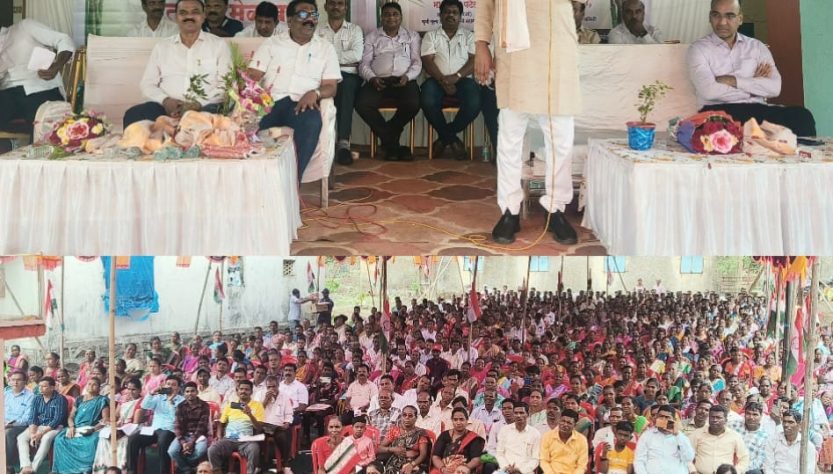
Thane district’s Bamboo Mission gatherings enchanted by the ‘Pasha Patel Pattern’ Thane: There is a subsidy scheme of ₹7,04,000 under the Mahatma Gandhi National Rural Employment Guarantee Scheme for bamboo cultivation. While explaining the importance of this scheme to farmers in the tribal areas, a tribal farmer stands up, and Pasha Patel, the Chairman of the Agricultural Price Commission and Executive Chairman of the Chief Minister’s Environmentally Balanced Development Task Force, explains the economics of traditional paddy farming to him. Simultaneously, to clarify the bamboo cultivation scheme, officials like the Gram Sevak, Agricultural Assistant, Block Development Officer (BDO), Tehsildar, and Deputy Collector are made to stand in the gathering and their responsibilities are publicly outlined. This is the farmer, this is the scheme, and this is the officer… Due to Pasha Patel’s unique pattern in these gatherings, the first day of the Bamboo Mission event in Thane, following Palghar, was a resounding success.
After the successful Bamboo Mission gatherings in Palghar, the second phase began today (May 25) in Thane district. Two gatherings were held today under Pasha Patel’s guidance in Bhiwandi’s rural and urban areas. The gathering in the rural area took place in Dabhade, attended by Bhiwandi Rural MLA Shantaram More, Bhiwandi Tehsildar Abhijeet Khole, officials from the Shramjeevi Sanghatana, and all relevant officers from rural development, agriculture, social forestry, forest, and revenue departments in the taluka.
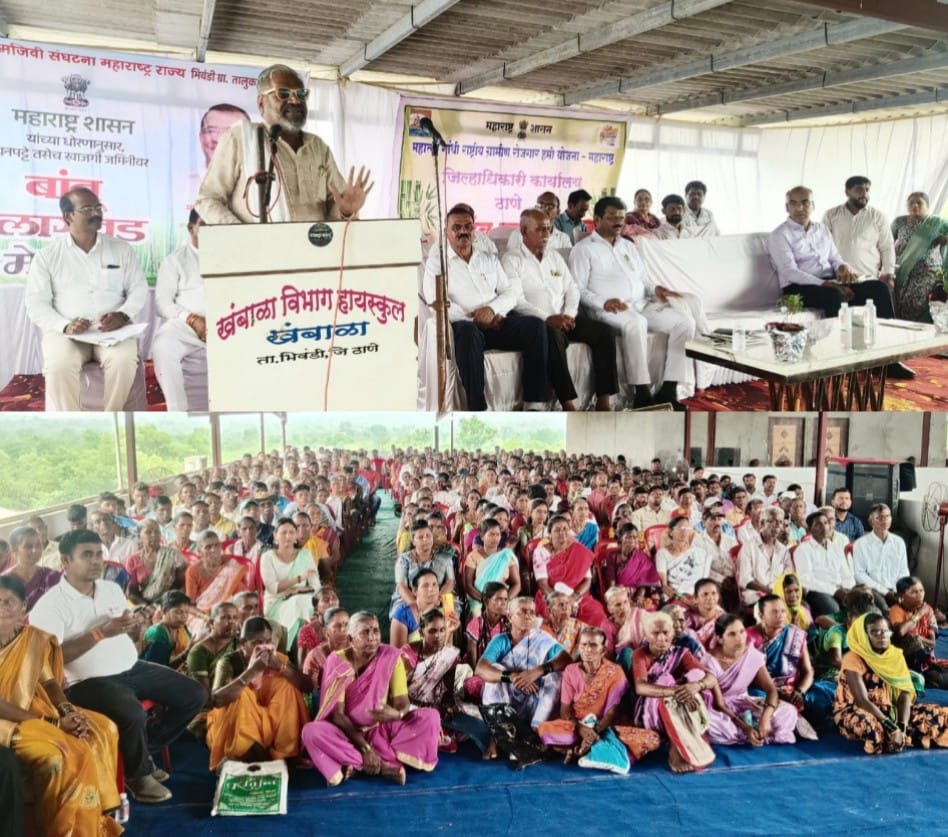
At the start of the gathering, Pasha Patel invited a tribal farmer named Gopal to the stage. During the question-and-answer session, Gopal said, “Sir, I earned ₹18,000 from paddy cultivation on 20 gunthas of land. After calculations, I was left with nothing in hand.” Pasha Patel explained that this is not just the plight of Gopal but of every farmer in the tribal hilly areas of Thane or Palghar, where paddy farming has become unprofitable.
The question then arises: If not paddy farming, then what? Pasha Patel explains that farmers can get a subsidy of ₹7,04,000 for bamboo cultivation, sparking excitement among the farmers. While the Mahatma Gandhi National Rural Employment Guarantee Scheme provides this subsidy, the question remains: how to avail it? Pasha Patel calls upon the Gram Sevak or BDO present in the gathering and asks, “If Gopal undertakes bamboo cultivation, will you provide him ₹7,04,000?” The officer responds with a “Yes,” prompting a wave of questions from the farmers. The next question is about the cost of saplings, which amounts to ₹40,000 per hectare, and farmers may not have that money. The BDO clarifies that saplings will be provided at government expense and delivered to the farmers. For digging pits for planting, the funds are directly deposited into the farmers’ accounts under the scheme. For fertilizers, the cost is also covered under the bamboo cultivation scheme. Additionally, if a farmer registers under the scheme’s muster for maintaining the plantation, they receive a daily wage of ₹312.
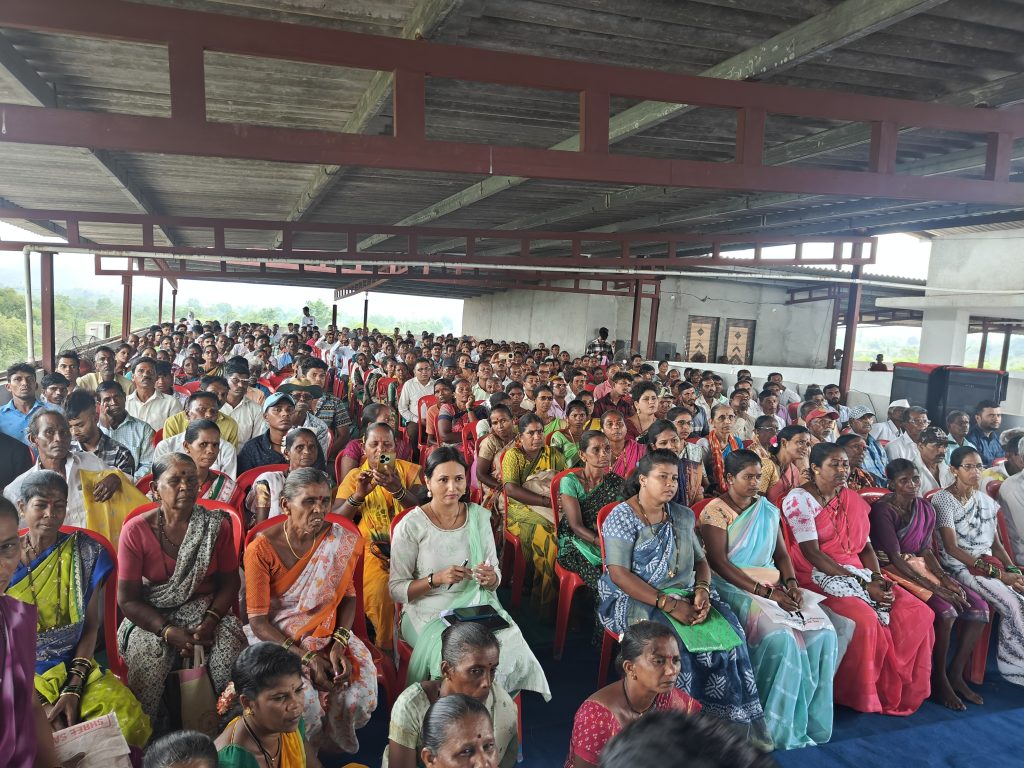
Pasha Patel then shows a bag containing bamboo products like shirts, T-shirts, and other items. He also displays the bamboo-framed glasses and watch he is wearing. Around 2,000 types of products can be made from bamboo. Bamboo pellets can be used for electricity generation instead of coal. Bamboo, a fast-growing grass, allows farmers to grow traditional crops like paddy, finger millet, or foxtail millet in the spaces between bamboo plants when planted at 10x10x10 intervals. This brings smiles to the farmers’ faces.
Subsidies are provided for planting bamboo, growing it, and selling bamboo products. Bamboo is environmentally beneficial as it has the highest carbon absorption capacity and significant oxygen production, making it highly effective in reducing carbon emissions and controlling rising temperatures.
After an hour-and-a-half-long session, Pasha Patel addresses any remaining questions from the farmers, concluding the gathering with resounding applause. This program, unlike typical government events, is considered a groundbreaking initiative for both farmers and officials.
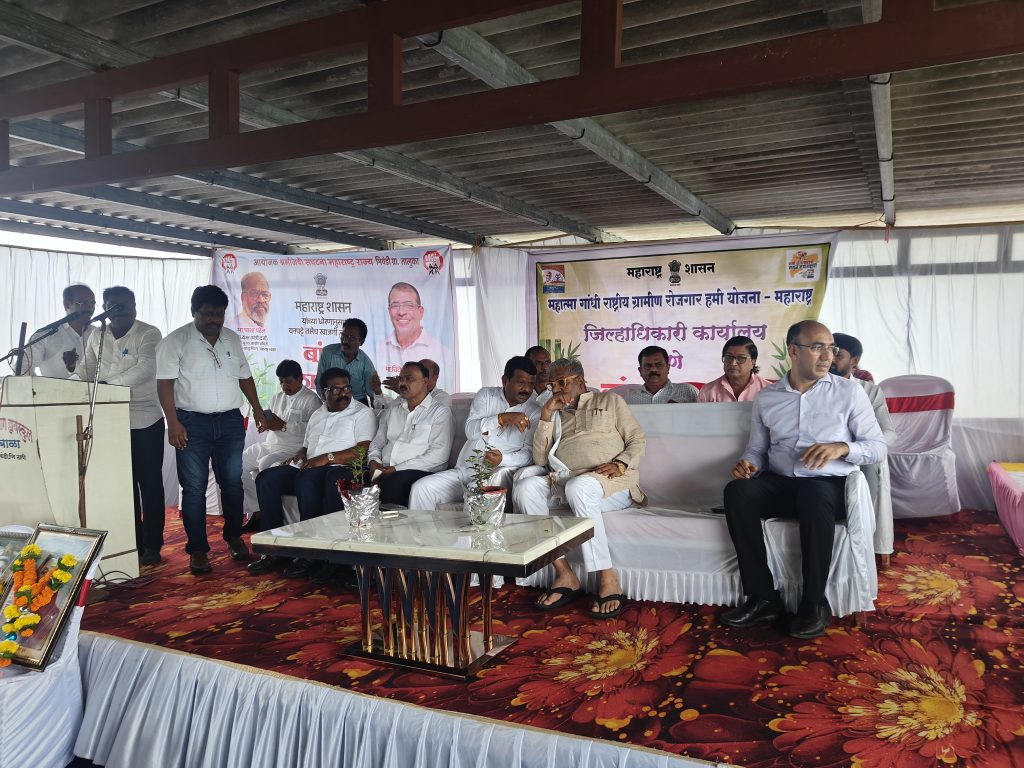
In today’s first-day guidance programs in Bhiwandi, MLA Shantaram More expressed hope that bamboo cultivation would drive development in underdeveloped rural Bhiwandi, as tribal farmers’ forest land titles remain unused by the forest department and farmers alike.Ramabhau Parwa from Shramjeevi Sanghatana emphasized the necessity of bamboo cultivation to preserve these lands. Shantaram Bhoir proposed a resolution for 3,000 farmers to plant 10 to 15 lakh bamboo saplings.
From May 25 to 28, Bamboo Mission gatherings will continue in Thane district, covering Shahapur, Murbad, Titwala, Wangani, Pachwad, and Versave