
State bears zero cost. Google trains the workforce. And the classroom is where it all has to land.
Vijay Gaikwad
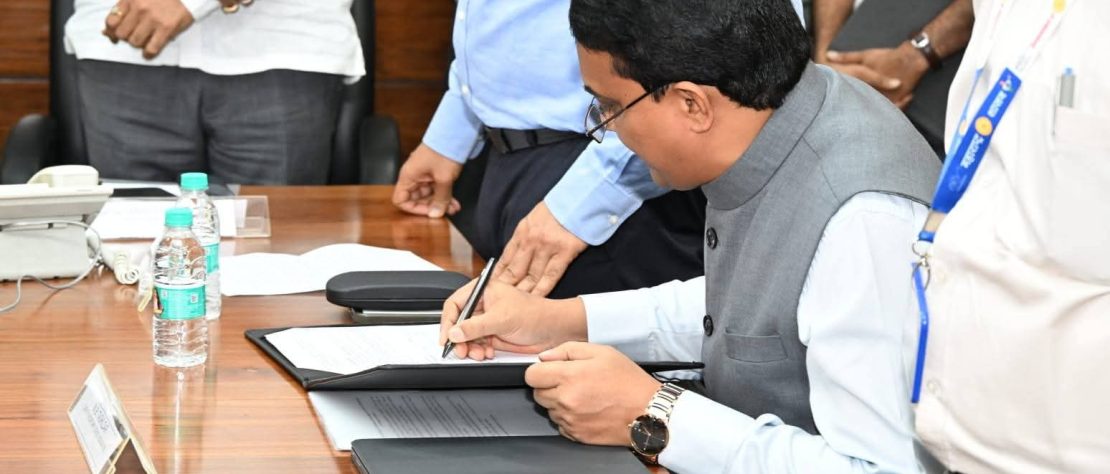
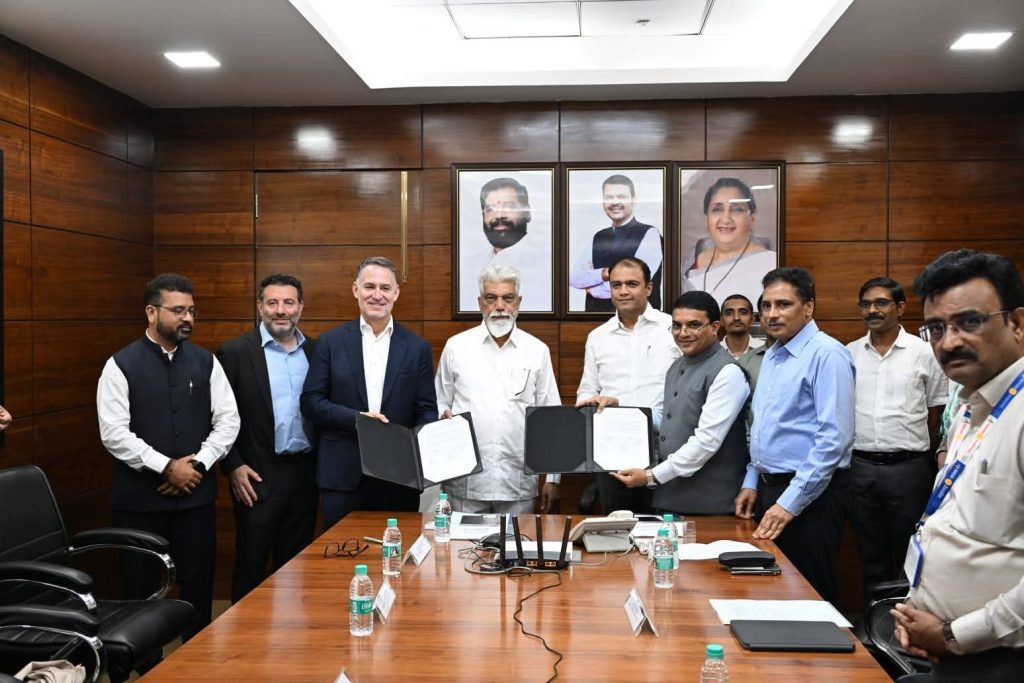
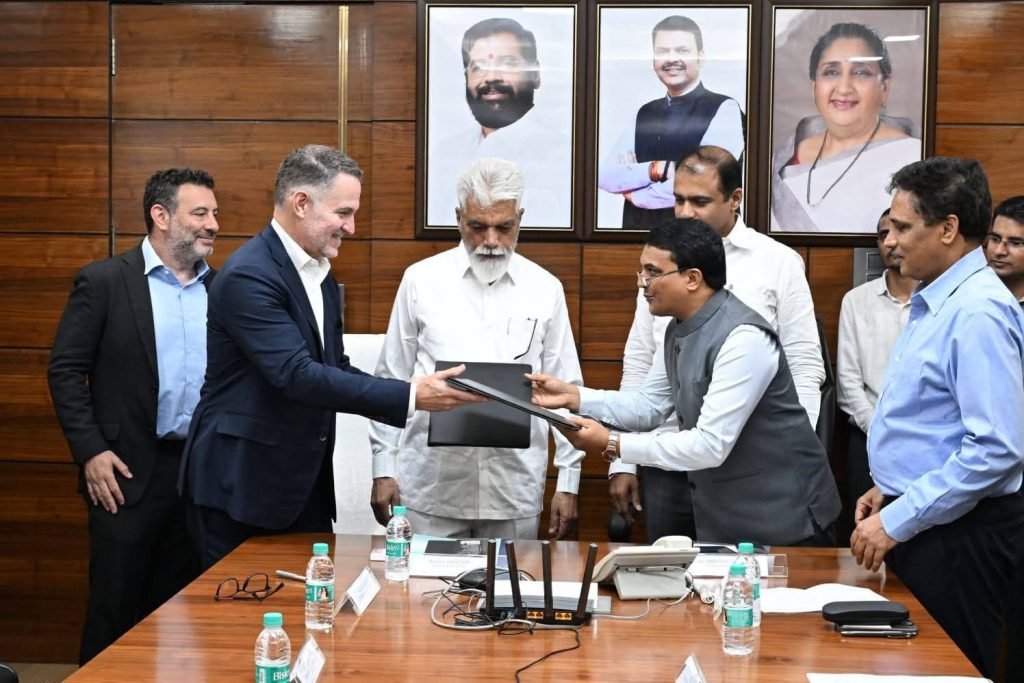
Mumbai, June 19: Let’s be clear about what happened at Mantralaya today. This wasn’t a routine MoU signing. The School Education Department and Google for Education inked a Statement of Intent that puts more than four lakh Maharashtra teachers on a path to AI and digital training — within eighteen months, at zero cost to the state exchequer.
That last part matters more than it sounds.
The signing happened under the chairmanship of School Education Minister Dadaji Bhuse. On the Maharashtra side, Joint Secretary Tashildar signed. Google sent its Vice President — Chris Phillips, who heads Geo Maps and Google for Education globally. Not a regional sales head. Not a country manager. A global VP. In the room were also Colin Marson, Director for Google for Education across Europe, the Middle East, Africa, Japan and Asia-Pacific; Sanjay Jain, Head of Google for Education India; and Principal Secretary Ranjitsinh Deol, IAS. Minister of State Pankaj Bhoyar was present too.
When Google flies in that level of leadership for a state-level signing, it’s saying something.
So what actually gets built?
The training doesn’t try to reach four lakh teachers at once. It can’t — no programme that tries to do that survives contact with reality. Instead, a cohort of Master Trainers gets trained first. They then carry the learning into schools, district by district, cluster by cluster. It’s the cascade model, and when it’s properly embedded in Maharashtra’s existing DIET network, it works.
Training runs in Marathi, Hindi and English. That’s non-negotiable — a programme that only works in English is a programme that doesn’t work in Osmanabad or Nandurbar. Minister Bhuse was clear on one other point: the state government keeps full oversight and control throughout. Digital security for teachers is built in. Google doesn’t get a free run.
What does the training actually cover? AI literacy, obviously. Digital skills. Locally-adapted training material. A secure digital identity for every participating teacher. Hands-on use of Google’s AI tools — Gemini for Education, NotebookLM, Google Workspace — in actual classroom contexts. And professional development that sticks, not a one-day workshop that everyone forgets by Monday.
What the ministers said — and what they meant
Minister Bhuse put it plainly: “In the era of Artificial Intelligence and digital technology, equipping teachers with modern skills is the need of the hour.” The more important thing he said came after — the entire programme is free. Google bears the cost. The state pays nothing.
That is the political masterstroke here, honestly. No finance department approval required. No budget allocation fight. No tender. Just get it done.
Minister of State Pankaj Bhoyar was equally direct: “The significance of Artificial Intelligence is growing rapidly in the 21st century. Our department had always hoped that teachers in government and aided schools would receive training from a world-class institution.” He’s right that this fills a gap — government school teachers rarely get access to the kind of professional development that private school counterparts take for granted.
The signing official described the partnership as “a shared commitment to empowering every learner and educator through innovation and technology.” Fine words. The test is whether Master Trainers actually reach Class VI teachers in Melghat twelve months from now.
NEP 2020 and the digital infrastructure it needs
This initiative fits into NEP 2020’s framework — specifically the policy’s insistence on AI as a teacher training priority and technology-enabled, flexible professional development. It also connects directly to the state’s existing digital learning infrastructure: ICT Labs, Smart Classrooms, Connected Classrooms, Digital Libraries and Language Labs all get stronger when the teachers using them actually know what they’re doing.
That connection is real, not rhetorical. An ICT Lab with an undertrained teacher is expensive furniture. Same lab, trained teacher — different story.
Why this number — 4 lakh — is significant
Maharashtra runs 1.08 lakh schools. Roughly 2.3 crore students. More than 5.5 lakh teachers. Training four lakh of them means reaching nearly 73% of the state’s entire teaching workforce in eighteen months.
For context: the OECD’s Digital Education Outlook 2026 found that 37% of lower secondary teachers worldwide already use AI professionally — but 72% of them worry they’re doing it wrong. The tools are in their hands. The training isn’t. That’s the gap Maharashtra is trying to close.
And it’s not alone. Google announced similar partnerships with Chhattisgarh, Assam, Ladakh and Punjab at the Education World Forum 2026 in London. But Maharashtra, with its scale, is the one that will define whether this model actually works across India’s public school system.
One more thing worth saying plainly: when a Google Vice President and an EMEA-JAPAC Director show up personally in Mumbai for a state government signing ceremony, Maharashtra isn’t a test market. It’s the flagship. That positioning carries obligations — for Google to deliver, and for the state to hold it accountable.
AT A GLANCE
- Agreement: School Education Department + Google for Education
- Signed by (Maharashtra): Tashildar, Joint Secretary, School Education Dept.
- Signed by (Google): Chris Phillips, VP — Geo Maps & Google for Education
- Chaired by: Dadaji Bhuse, School Education Minister
- Also present: Colin Marson, Director — Google for Education (EMEA & JAPAC); Sanjay Jain, Head — Google for Education India; Ranjitsinh Deol IAS, Principal Secretary
- Beneficiaries: 4 lakh+ teachers
- Timeline: 18 months
- Cost to state: Zero
- Languages: Marathi, Hindi, English
- Model: Master Trainer Cascade
- Tools: Gemini for Education, NotebookLM, Google Workspace AI
- Oversight: Government of Maharashtra