Whose politics are Satyajit Tambe’s, really?
By Vijay Gaikwad
It was a cold December 2025 morning. In the small village of Takali Dhokeshwar, in Parner taluka of Ahmednagar district, an extraordinary scene was unfolding. Workers from ‘Avada’, a solar energy company, had entered farmers’ private agricultural land — no prior permission, no compensation, and under police protection, they were erecting electricity poles at full pace. Farmers protested. Some were taken into custody. The rights of private ownership, the entries in land records, the livelihoods tied to farming — all of it was being violated in plain sight.
I was a witness to that struggle. The soil of Takali Dhokeshwar — my village — is connected to my childhood. The anguish of those farmers was not merely a news story for me; it was a matter close to my heart. I reached out to several elected representatives. I requested some, directly questioned others. “Where will these farmers go? Who will speak for them?” Every time, the answer was the same — “Let me see,” “We’ll talk later,” “Send me a message.”
In a democracy, elected representatives sometimes resemble empty chairs — visible, but offering no seat.
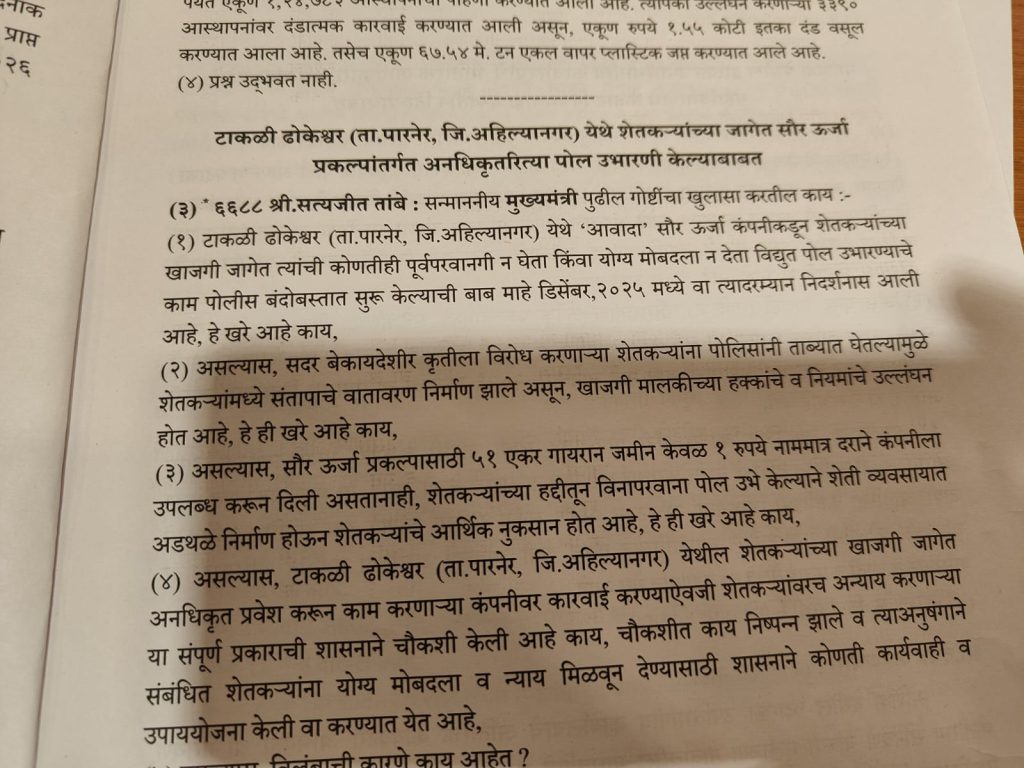
Starred Question No. 6688
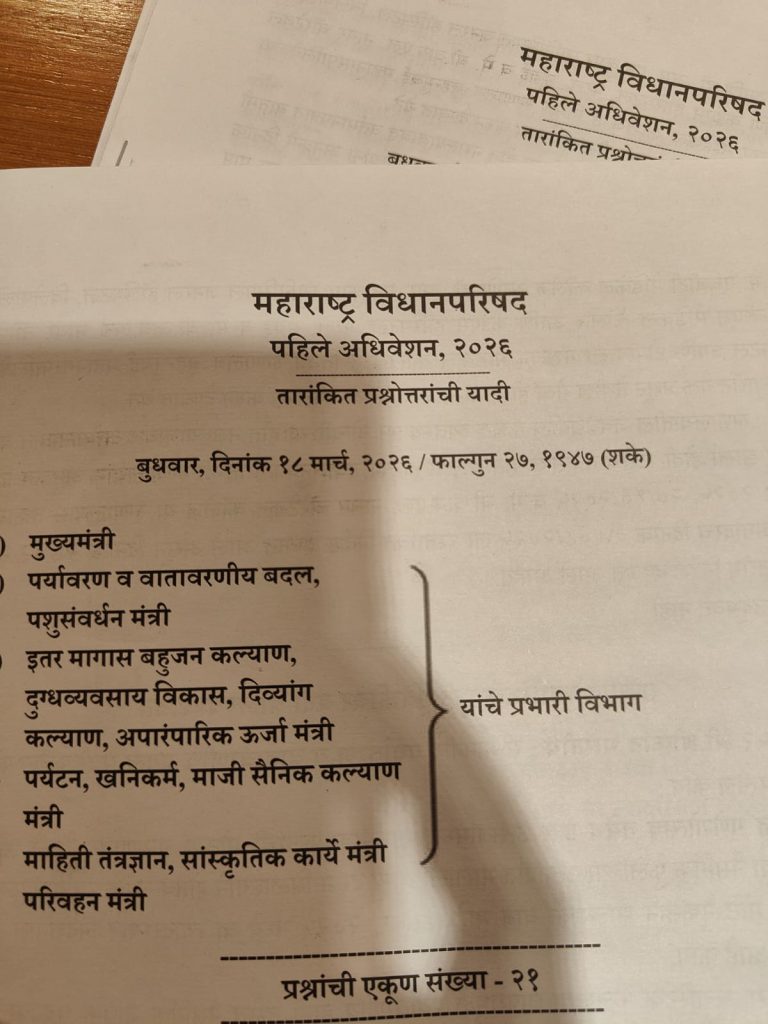
In the first session of the Maharashtra Legislative Council, on Wednesday, March 18, 2026, I saw a name — Satyajit Tambe. Starred Question No. 6688. Subject: Unauthorised erection of poles on farmers’ private land at Takali Dhokeshwar (Tal. Parner, Dist. Ahmednagar) under a solar energy project.
Something stirred in my chest — a mix of joy, expectation, and a measure of disbelief. The farmers’ struggle had finally found a platform in the legislature. The substance of the question was firm — that Avada company erected poles without prior permission, that farmers who protested were arrested, that 51 acres of grazing land was handed to the company at a token rate of one rupee, that farming was disrupted, that financial losses were mounting. The Chief Minister was required to respond directly.
I thought: finally, there will be accountability.
But what followed taught me yet another bitter lesson about Maharashtra’s politics.
Bouquets Before the Question
Satyajit Tambe rose in the Legislative Council. The expectation was clear — the injustice on the ground, the cries of farmers, the government’s indifference — he would take an aggressive stand. Instead, before asking even a single question, he lavished praise on Chief Minister Devendra Fadnavis’s solar energy policy. Maharashtra’s solar revolution, the leadership’s foresight, historic decisions — he did not tire of the accolades.
Wait. Just a moment.
The very government whose company’s unauthorised conduct is at the heart of the question — and you begin by extolling that government’s solar policy? In journalism, there is a familiar technique: “praise and then confront.” But here the sequence was reversed. First the praise, then the question. And even the question was framed in a way that caused its target minimal discomfort.
On paper, the question was sharp. In the chamber, it was blunted.
Brand Politics vs. Representative Politics
Satyajit Tambe is an undeniably prominent political figure. He is the grandson of a former Congress president and the nephew of Balasaheb Thorat. His political inheritance is heavy. Yet he has tried to carve out a distinct identity — he challenged Congress, won to the Legislative Council as an independent, subsequently grew closer to the BJP, and now operates under the shelter of the ruling dispensation while performing the appearance of an opposition role. That, in essence, is his politics.
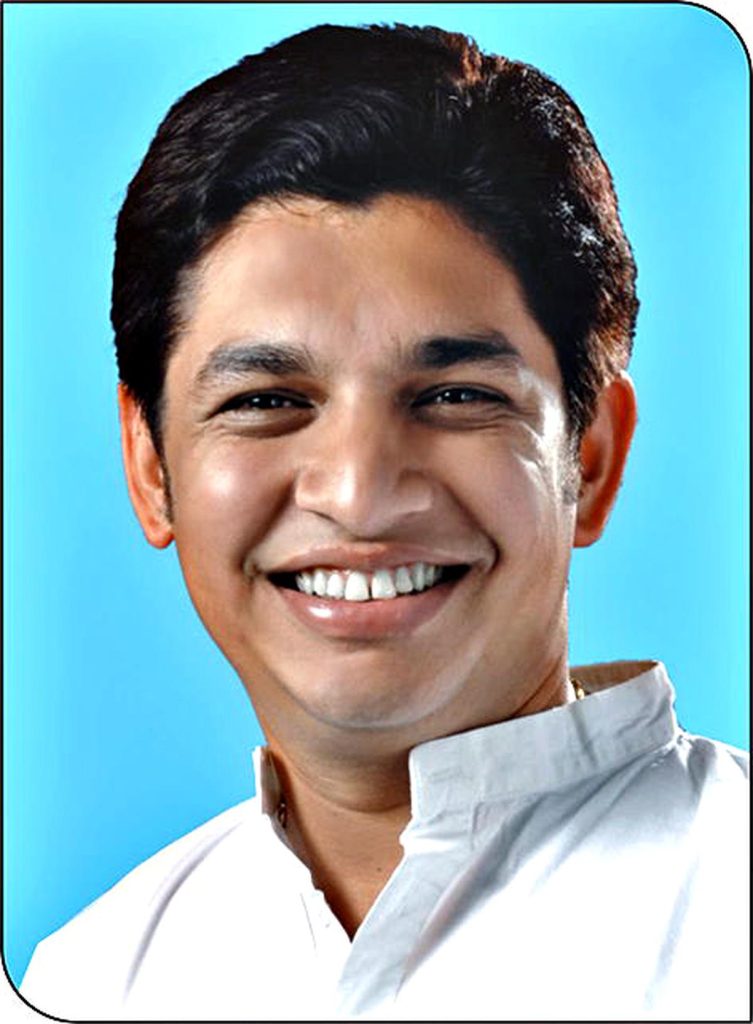
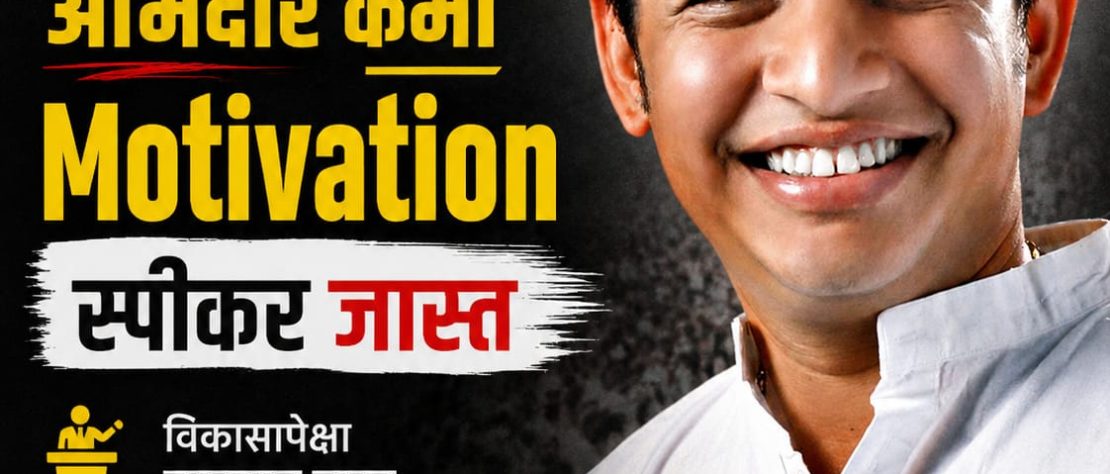
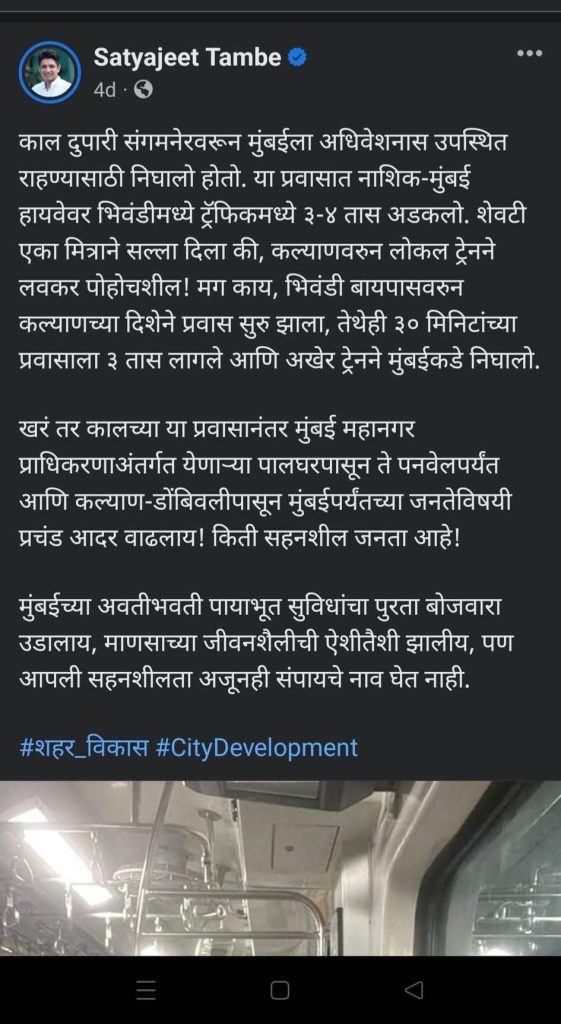
On social media, he is active and polished. Inspirational messages, quotations, curated photographs — everything in order. His public persona resembles that of a corporate motivational speaker. “Young leader,” “development-oriented,” “independently minded” — these tags fit his brand well. But brand and representation are two different things.
Brand means being seen. Representation means fighting.
The farmers of Takali Dhokeshwar did not need a brand. They needed someone willing to fight.
“Send Me a Message. We’ll Talk Later.”
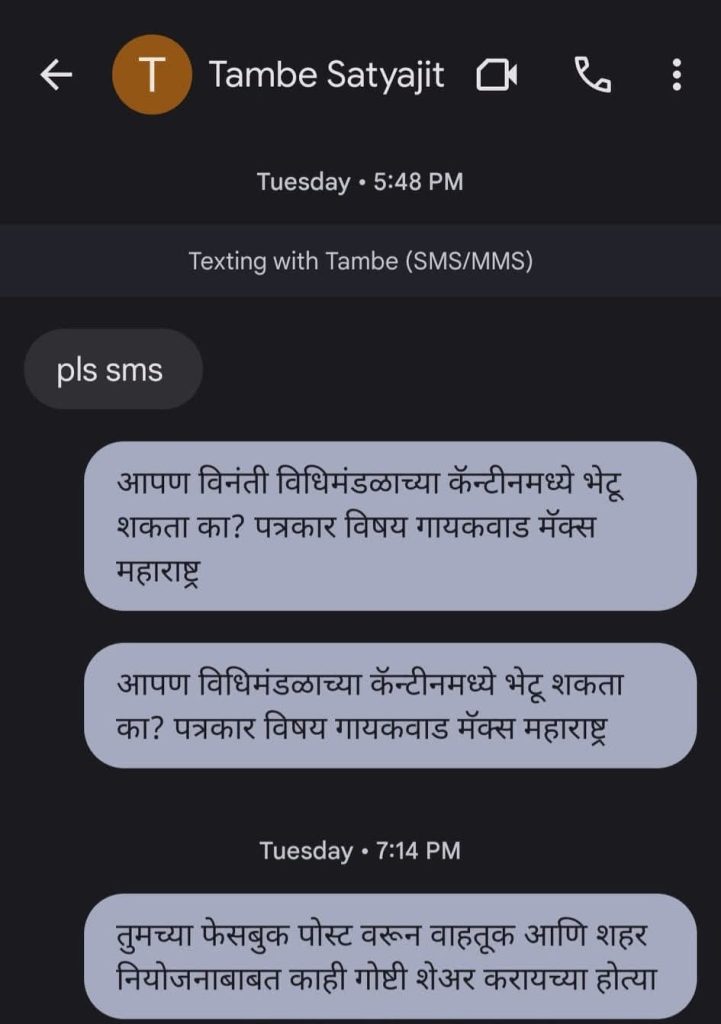
Let me share my own experience. During this struggle, I tried to contact several elected representatives. I sent detailed information to some. I requested personal meetings with others. From one came — “Send me a message, I’ll look into it.” From another — “I’m busy right now, let’s talk later.” A third did not respond at all.
These are not personal grievances. This is a systemic question.
In today’s politics, the accessibility of elected representatives is reserved for a specific category — the media, party officials, industrialists. For farmers, labourers, ordinary people — “send me a message” is the only answer available.
I am not saying this specific charge applies to Satyajit Tambe. But his conduct in the legislature raises a pointed question: when the opportunity arose to place the farmers’ case forcefully before the government, why did praise for the ruling establishment come first? Whose ears, in that moment, was he really speaking to?
Uttam Kamble’s Observation
Senior journalist Uttam Kamble made an important observation in 2011: “Maharashtra now has fewer workers and more leaders.” He argued that political struggle had been replaced by brand management. It is easier to post a photograph of an agitation than to actually participate in one. It is safer to deliver a speech about farmers than to stand in the mud fighting for them.
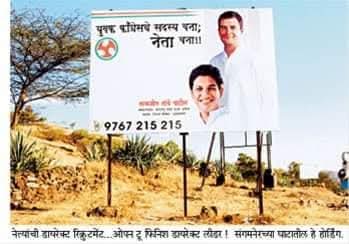
Fifteen years on, that observation feels more relevant than ever.
Today, leaders release books. They deliver lectures. They post inspirational quotes on social media. They speak in TED Talk style. But when a pole is driven into a farmer’s field without permission in some village, these leaders are nowhere to be found. They appear only when there is a camera.
The Mumbai-Nashik Highway: A Case in Point
Satyajit Tambe represents a constituency connected to the Nashik belt. The chronic traffic congestion on the Mumbai-Nashik highway is a daily ordeal for millions of ordinary citizens. How many times has he aggressively pursued this issue in the legislature? How many times has he held the government to account on this matter? A review of the record would be sobering.
Contrast this with questions that do not seriously challenge those in power, positions that look good in media coverage, and stances that allow him to maintain the performance of being an “independent leader.” This is not unique to Tambe. But he is an exemplary illustration of the tendency.
Congress, BJP and the Politics In Between
Satyajit Tambe fought Congress, won as an independent — that took genuine courage. But he subsequently chose to move closer to the BJP, at least in terms of political behaviour. Being anti-Congress is not the same as being pro-people. Political independence, when expended in praising the ruling establishment, becomes suspect.
The old dynastic politics of Congress was rejected; a new politics arrived in its place. But the new politics employs the same old techniques — only the party changes, the skill remains constant. Speaking forcefully in opposition and speaking conveniently when close to power — this is Maharashtra politics’ timeless formula.

What the Starred Question Really Tells Us
The questions raised in Legislative Council Question No. 6688 are important. The queries about Avada company’s unauthorised conduct are legitimate. But the manner in which the question was asked, the preceding praise, the body language in the chamber — all of it sent a clear message: “We are asking, but we don’t want to cause too much trouble.”
This is a kind of political aesthetics. Asking a question is not the same as fighting for a cause. Placing something on record is not the same as securing justice. Speaking in the legislature is not the same as standing with the farmers.
The farmers of Takali Dhokeshwar are still waiting. The poles on their land are still standing. The compensation they received — zero. The justice they received — still zero.
A question was asked in the chamber. An answer came — in government language, in government style. And no follow-up question was asked.
Democracy needs good orators. Eloquent language, effective presentation, a strong social media presence — these are all parts of modern politics. But the people do not want only orators.
The farmers of Takali Dhokeshwar needed a man who would stand in their fields. Who would take to the streets to stop the company. Who would wipe the tears from a farmer’s eyes before rising to extol the government’s solar policy.
A motivational speaker earns applause in the auditorium. A representative fights for the people.
Inspirational speeches earn applause. Standing against injustice makes history.
Satyajit Tambe should ask himself whose politics he is really practising — because the farmers of Takali Dhokeshwar are still waiting for an answer.
Vijay Gaikwad is a senior agricultural journalist and policy analyst, and Founder-Editor of krishiparva.in