
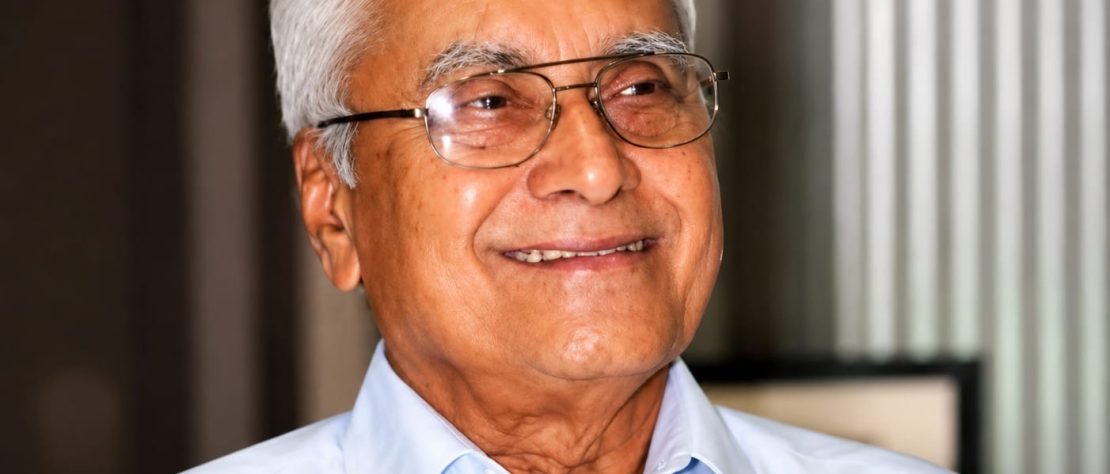
A tribute to Professor Dr. Ram Takawale — visionary educationist, architect of open learning, and pioneer of agricultural technology
A Facebook post by Sharad Pawar recently caught my eye, and once again, memories came flooding in.
It has been three years since Professor Dr. Ram Takawale left us. Yet some people never truly die. They live on through ideas, institutions, technologies, and the dreams of the thousands they inspired. Dr. Takawale was one of those rare individuals.
In today’s “post-truth” era — where hatred, distorted history, and manufactured emotions dominate public discourse — it becomes all the more important to remember a man who dedicated his entire life to democratising knowledge. Born in Hargude, a small rural village in Maharashtra’s Purandar taluka, Dr. Takawale rose to become a towering force in education, technology, and social transformation.
A Student’s Memory from Pune
When I was studying at the College of Agriculture in Pune, life was moving in multiple directions at once. Alongside agricultural education, I was deeply absorbed in photography, public lectures, travel, and “earn while learn” ventures. I was searching — searching for a future at the intersection of farming and communication.
Those were the late 1990s and early 2000s. A completely different technological world.
I had begun learning computers around 1996–97, in the era of DOS, Lotus 1-2-3, floppy disks, and dial-up internet. Cyber cafés had mushroomed across Pune, charging ten to thirty rupees an hour for internet access. Looking back today, it feels almost prehistoric.
Before “Agri-Tech” Was Even a Word
During that period, I became associated with Sanjay Borkar and Shivrai Technology. We were working on a visionary initiative called “Parivartan” (Transformation). The idea was revolutionary for its time: to establish computer-connected centres in every village and taluka of Maharashtra, where farmers could bring their problems and receive expert guidance through a digital knowledge network.
Today, the world celebrates “AI for Agriculture” and AgriTech innovation at glossy conferences.
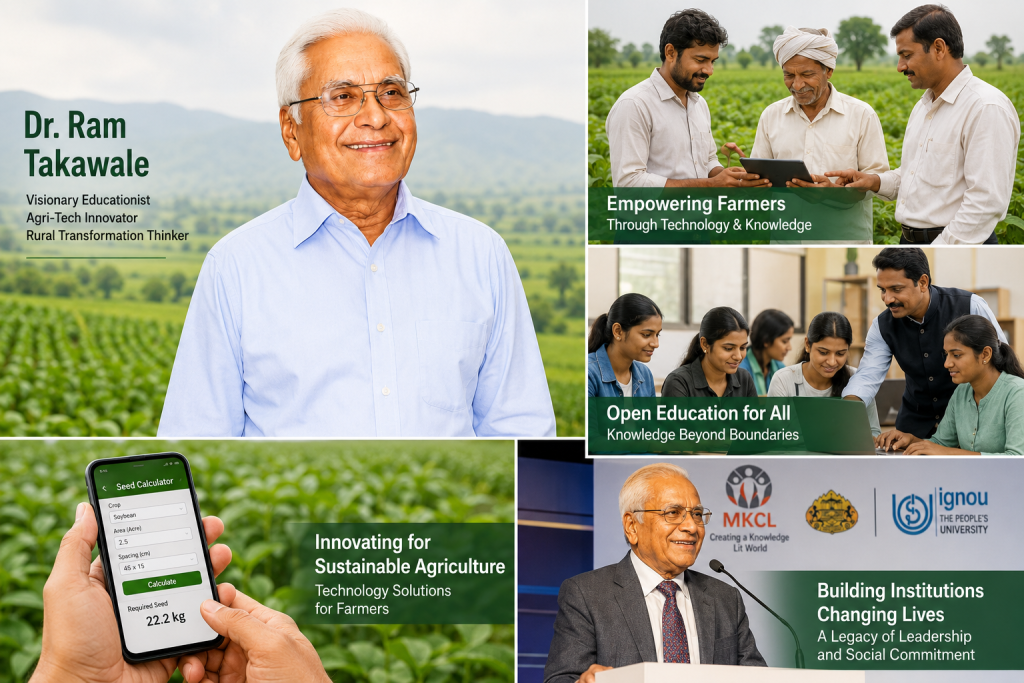
But more than two decades ago, we were already building agricultural software systems. We developed Seed Calculators to estimate seed requirements per acre or hectare. We created software capable of identifying crop diseases and pests based on symptoms and suggesting remedies. We produced multimedia CDs on medicinal plants, mango cultivation, and agricultural practices — in collaboration with Dapoli Agricultural University.
At that time, the term “AgriTech” barely existed.
And at the heart of this transformative movement stood Dr. Ram Takawale.
An Architect of Social Change Through Education
He was not merely a Vice-Chancellor. He was an engineer who connected education to society itself.
He served as the first Vice-Chancellor of Yashwantrao Chavan Maharashtra Open University, and subsequently as Vice-Chancellor of Savitribai Phule Pune University and Indira Gandhi National Open University. But his vision stretched far beyond any administrative title. He believed knowledge must not remain locked within urban campuses and elite classrooms — it had to reach the villages, the marginalised, and the ordinary people.
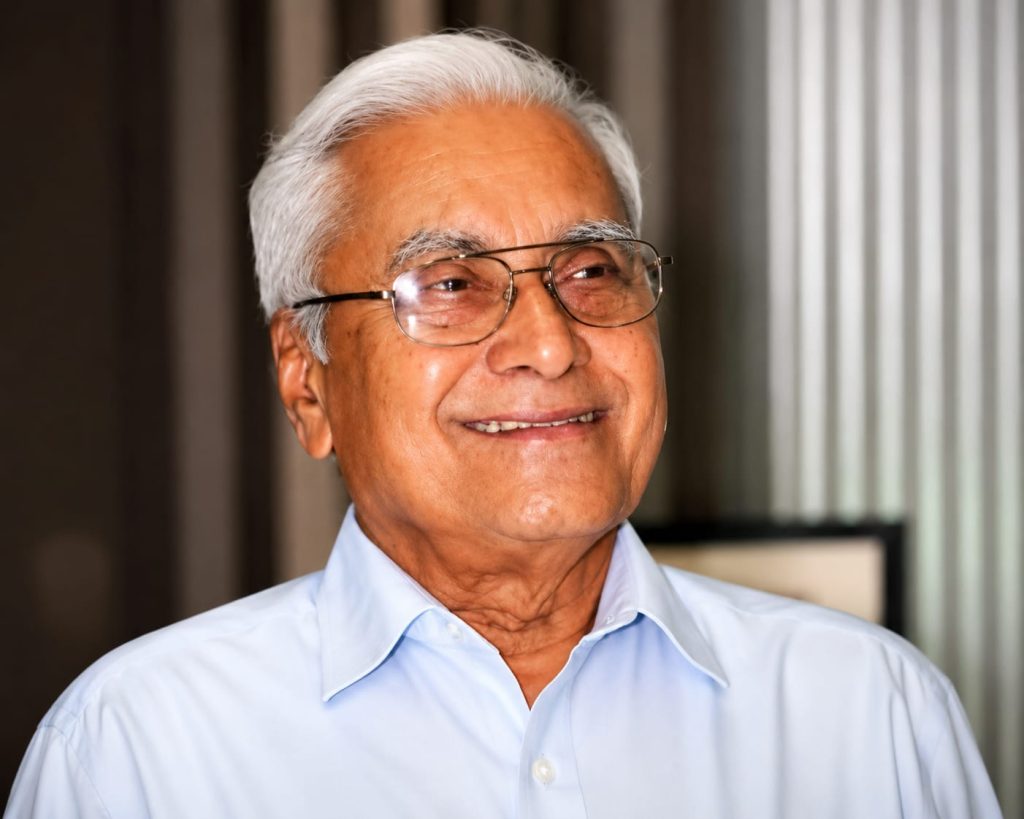
He transformed education from a closed institutional system into a social movement.
Long before “digital learning” became fashionable, Dr. Takawale recognised that technology could be a powerful instrument for democratising education and empowering rural communities. Through initiatives like Maharashtra Knowledge Corporation Limited (MKCL) and international collaborations such as the Commonwealth of Learning, he worked to build accessible learning systems — not just for India, but for developing nations across Africa.
What made him extraordinary was that retirement never slowed him down. Many people stop working after achieving positions of power. Dr. Takawale used every position as a launchpad for transformation.
A Worldview Forged in Social Commitment
His thinking carried the social commitment of the Rashtraseva Dal, the humanism of socialist thought, and a deep, abiding faith in scientific, inclusive education. He believed societies are not built through hatred or hollow slogans — they are built through knowledge, critical thinking, and equal access to learning for all.
At a time when public life is increasingly poisoned by propaganda, divisive narratives, and emotional manipulation, remembering people like Dr. Takawale becomes an act of resistance and of hope.
From the small village of Hargude emerged a blazing sun of knowledge who illuminated countless lives.
Death may have taken the man. But the movement he ignited still burns. Every young person working today at the intersection of agriculture, education, and technology carries forward a fragment of Dr. Takawale’s unfinished dream.
A humble tribute to Professor Dr. Ram Takawale — a towering scholar, a visionary educationist, and a relentless warrior of transformation.
— Vijay Gaikwad
(The author is a senior agricultural journalist, Founder-Editor of Krishiparva, and Director of Strategy & PR at F2F Corporate Consultants Pvt. Ltd.)
Dr. Ram Takawale: Third Death Anniversary (13 May)
The Vice-Chancellor Who Kept the Student at the Centre of Everything
— Prashant Kothadiya | 13 May 2026
📖 Also read on this tribute — मराठी → ज्ञानसूर्याचा अस्त… पण परिवर्तनाची ज्योत अजून जिवंत आहे English → The Sun of Knowledge Has Set… But the Flame Still Burns
Some extraordinary people enter your life only when the stars align — and without your realising it, they illuminate every corner of your existence. It was in 1980 that Professor Dr. Ram Takawale, then Vice-Chancellor of Pune University, first walked into my life — a remarkably warm and gracious personality. He stayed there until his very last breath in 2023. Every moment spent in his company, every conversation, every exchange of ideas left me richer than before. On the night of 13 May 2023, he breathed his last.
Those Years at Pune University
Dr. Takawale served as Vice-Chancellor from 1978 to 1986. It was during this same period — 1980 to 1982 — that I enrolled at Pune University for my M.A. in Philosophy. Those two years proved to be among the most defining of my life, not least because they brought me into close contact with Dr. Takawale — his guidance, his warmth, and his vision.
In 1981, I was elected General Secretary of the university’s postgraduate gymkhana. During those two years, our team organised many different events. We began with a blood donation camp. At exactly 9 a.m., the Vice-Chancellor’s car arrived at the venue — he donated blood himself to inaugurate it, and our enthusiasm doubled on the spot.
Later, we organised the first-ever public lecture by Shri Sharad Joshi in Pune — this was shortly after his successful onion agitation at Chakan. The response from rural students was overwhelming. Presiding over that event, Dr. Takawale — himself born in the small village of Hargude in Purandar taluka, Pune — spoke precisely and movingly about the hardships of farmers. He made it a point to attend every programme we organised. You could always sense his genuine curiosity about how the new generation thought and felt.
A Responsive Leader, Always
Dr. Takawale believed deeply that education must be student-centred, and he was constantly alert to any inconvenience students might face. One example stands out. The Jaykar Library at Pune University used to close every evening at 8 p.m. due to inadequate staff. A few of us put out a notice: “Keep the library open until 11 p.m. starting today — or we won’t leave.” The notice reached the Vice-Chancellor’s office within ten minutes. Within the next ten minutes, Dr. Takawale had already called the librarian and given the order. Countless students benefited from that single decision.
When I was elected GS, we requested Dr. Takawale to spare some time periodically to hear student issues. He immediately reserved every Wednesday, 4–5 p.m. exclusively for us — and even arranged for his office to send word if he had to travel. Along with colleagues including Geetaram Gaikwad, Sambhaji Jadhav, Prakash Pagariya, Sanjay Devdikar, Jyoti Girme, and Ajay Limaye, I met him almost every Wednesday for a year. Countless student grievances were resolved — without a single agitation.
The Dream of an Open University
In 1985, the Maharashtra government appointed Dr. Takawale to head the Maharashtra Open University Cell. He was tasked with studying open universities across India and the world and drafting legislation to establish one for Maharashtra — one that would teach in Marathi and reach students who had been left behind. He asked me to assist him, and I immediately said yes. That he considered and chose me for this work was itself a great honour.
We were given an office on the 18th floor of the New Administrative Building, opposite Mantralaya in Mumbai. Every Monday morning — Pune to Mumbai by Deccan Queen; every Friday evening — Mumbai back to Pune. The conversations during those train journeys, and the long evenings over tea at his government flat in ‘New Shelter’ near Churchgate, remain among the most cherished memories of my life.
The then Chief Minister Shankarrao Chavan was not in favour of the Open University. The Bill was shelved. But when Sharad Pawar returned as Chief Minister two to three years later, he announced in 1989 — in Nashik — the establishment of Yashwantrao Chavan Maharashtra Open University, with Dr. Ram Takawale as its first Vice-Chancellor. Millions of under-educated students across Maharashtra were finally able to access higher education and earn promotions in their jobs. In 1995, Dr. Takawale was also appointed Vice-Chancellor of Indira Gandhi National Open University, giving him direct engagement with international education systems.
Technology as a Tool for Social Change
Dr. Takawale had an unshakeable conviction: information technology holds vast potential to reduce educational inequality and improve the efficiency of educational systems. He was among the very few educationists who recognised early on that the IT sector would become the defining language of the next generation.
He constantly read and reflected on how to retain the essence of Mahatma Gandhi’s ‘Nai Talim’ — life-oriented, labour-based education — while weaving in the ideas of equality from Mahatma Phule, Chhatrapati Shahu Maharaj, and Dr. Babasaheb Ambedkar, and linking all of it with modern technology.
When Maharashtra Knowledge Corporation Limited (MKCL) was established, Technical Education Minister Dilip Walse Patil and MKCL’s Executive Director Vivek Sawant formally brought Dr. Takawale on board as a Director. In the years following his wife Smt. Prabhavati Takawale’s passing, Dr. Takawale threw himself completely into this work.
The Same Enthusiasm at Ninety
Rooted in the values of the Rashtra Seva Dal, Dr. Takawale had immense affection and admiration for any young man or woman doing constructive work. No matter how unfamiliar the visitor, no matter their social standing — he welcomed everyone with a smile, listened with care, and focused on their strengths. Even a brief meeting left people feeling inspired and encouraged.
Even at ninety, he would ask visitors with the same energy and hope about new educational experiments being tried somewhere in the country. That is why, even in the final chapter of his life, his mind remained calm, cheerful, and fully alive.
On his third death anniversary, a heartfelt tribute to the extraordinary life and enduring legacy of Professor Dr. Ram Takawale.
— Prashant Kothadiya 13 May 2026
(The author is a long-time associate of Dr. Ram Takawale, former General Secretary of the Pune University Postgraduate Gymkhana, and co-worker in the founding of Maharashtra’s Open University framework.)
📖 Also read Vijay Gaikwad’s tribute to Dr. Takawale: मराठी → ज्ञानसूर्याचा अस्त… पण परिवर्तनाची ज्योत अजून जिवंत आहे English → The Sun of Knowledge Has Set… But the Flame Still Burns