Palghar District Takes Responsibility for Mumbai’s Oxygen Supply
Palghar: To combat the growing crisis of climate change, tribal farmers in Palghar district have embarked on an ambitious mission to plant one crore bamboo trees, not only to realize the dream of a green Maharashtra but also to supply oxygen to neighboring Mumbai. The Palghar district administration, in collaboration with the Shramjeevi Sanghatana, launched the ‘Bamboo Planting Mission’ today.
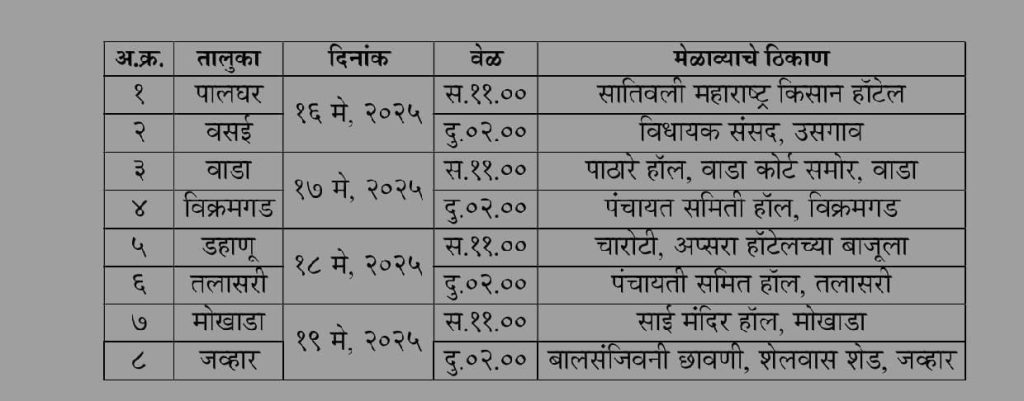
As per the Maharashtra government’s policy, bamboo plantation programs have been organized across all talukas of Palghar district on forest lease lands (Vanpatta) and private lands. The events are being held under the leadership of Hon. Pasha Patel, Chairman of the State Agricultural Price Commission (Minister of State rank) and Chairman of the Executive Committee under the ‘Hon. Chief Minister’s Environment and Sustainable Development Task Force,’ along with Hon. Vivek Bhau Pandit, Chairman of the State-Level Tribal Development Review Committee (Minister of State rank). Accordingly, ‘Bamboo Mission Farmers’ Meets’ have been scheduled from May 16 to May 19, 2025.
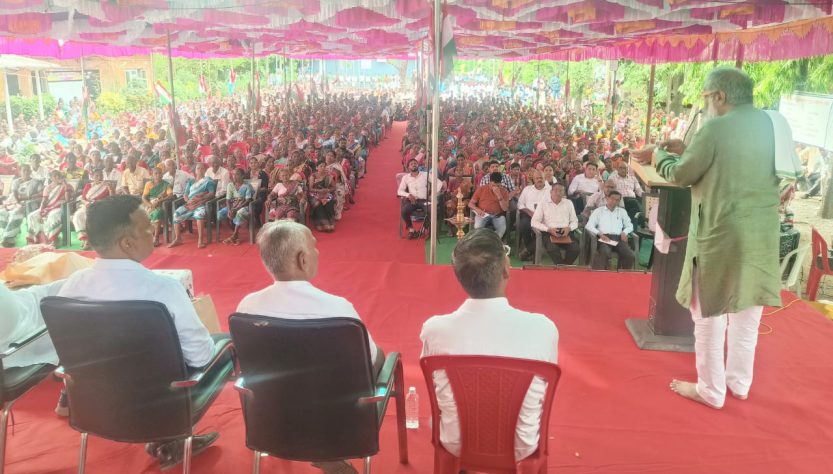
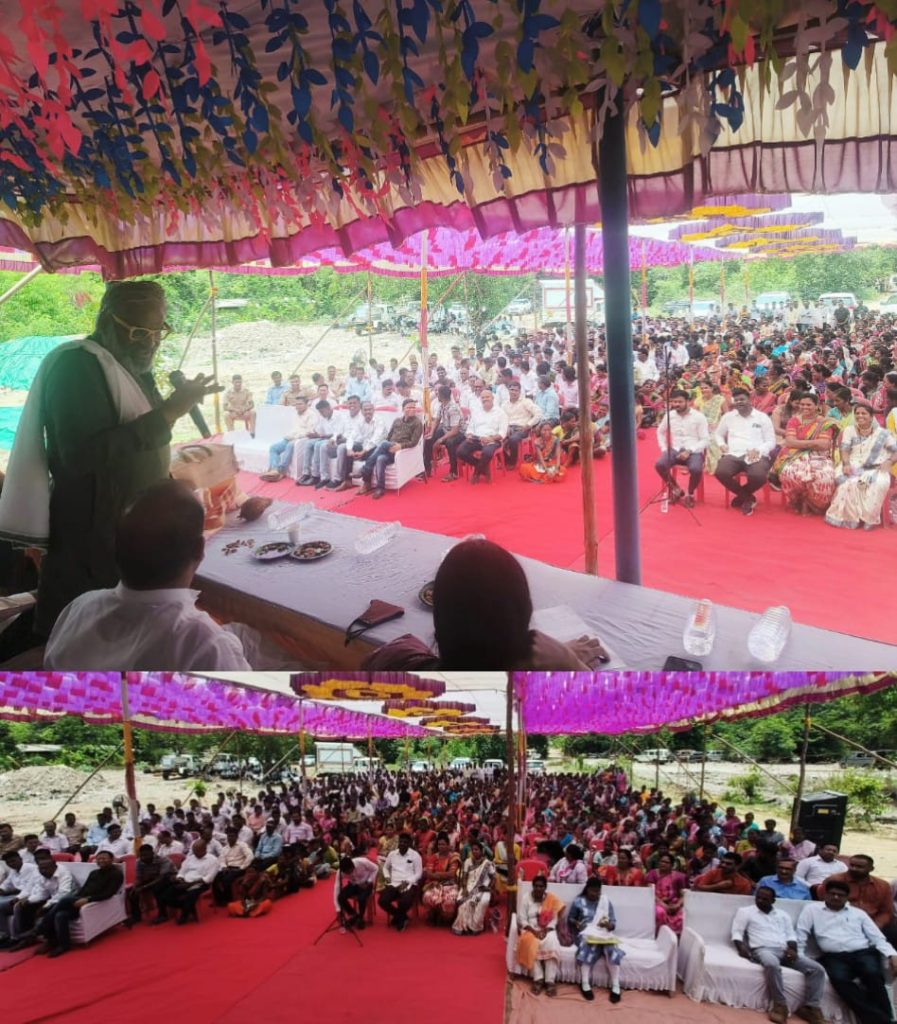
On Friday (May 16), Bamboo Mission Farmers’ Meets were held at Satwali in Palghar and Usgaon in Vasai, attended by a large number of tribal farmers and bamboo-producing farmers from the region.
Speaking at the event, Vivek Bhau Pandit, Chairman of the State-Level Tribal Development Review Committee, said, “After a long struggle, tribal farmers secured their rights to forest lease lands. Now, by initiating bamboo plantations on these lands, our aim is to uplift the living standards of tribals, protect the environment, and supply oxygen to neighboring Mumbai. To achieve this, thousands of farmers have begun preparations and planting programs in coordination with all state government agencies. We have set a target to plant one crore bamboo trees collectively in Thane and Palghar districts.”
Vasai MLA Sneha Dubey Pandit said, “There is no alternative to bamboo plantation on the lands allotted to tribals. Traditional paddy farming is no longer viable. Through bamboo plantation, we aim to generate oxygen, create self-employment opportunities, and improve the living standards of tribals.”
At both events, Pasha Patel, Chairman of the Chief Minister’s Environment and Sustainable Development Task Force, provided detailed guidance on the climate change crisis and the necessity of bamboo plantation. He said, “The visible effects of climate change are evident everywhere. To mitigate its adverse impacts on humanity, there is an urgent need for tree plantation. However, other trees have limitations. Therefore, we have chosen bamboo, which grows rapidly and is environmentally friendly.”
He highlighted that under the MGNREGA scheme, a subsidy of ₹7.04 lakh is available for bamboo plantation, and over 2,000 types of products can be made from bamboo, which he demonstrated to the attendees.
Pasha Patel emphasized that bamboo plantation is essential to curb rising carbon emissions and temperature increases. He explained that bamboo plantation subsidies, product manufacturing, and oxygen generation would benefit not only tribals but also urban residents of Mumbai. He further noted that the state government has allocated ₹4,300 crore in this year’s budget for bamboo processing, and the Pasha Patel Skill Tech University is being established to develop skills in bamboo-related industries. Bamboo pellets for energy production and the use of bamboo as a sustainable material are also key components of the Bamboo Mission.
“Now, the tribals of Palghar are joining the movement to save Mumbai and the world. In the coming years, we aim to meet Mumbai’s needs through the villages and tandas of Palghar district,” Pasha Patel concluded.
Sanjiv Karpe, Managing Director of Konbac and an international bamboo expert, presented success stories of bamboo-producing farmers from Sindhudurg district. Noting the rising demand for bamboo, he urged Palghar district, which is suitable for bamboo cultivation, to take the lead in bamboo plantation.
On the first day of the Bamboo Mission program, farmers from Satwali and Usgaon in Vasai responded enthusiastically. They expressed confidence in adopting bamboo plantation as a viable alternative to traditional paddy farming, which has become unprofitable, and achieving the mission’s goals.
Palghar’s Deputy Collector (MGNREGA), Vijaya Jadhav, provided information on the Bamboo Mission, guiding farmers on eligibility, subsidy amounts, and implementation under the Mahatma Gandhi National Rural Employment Guarantee Act.
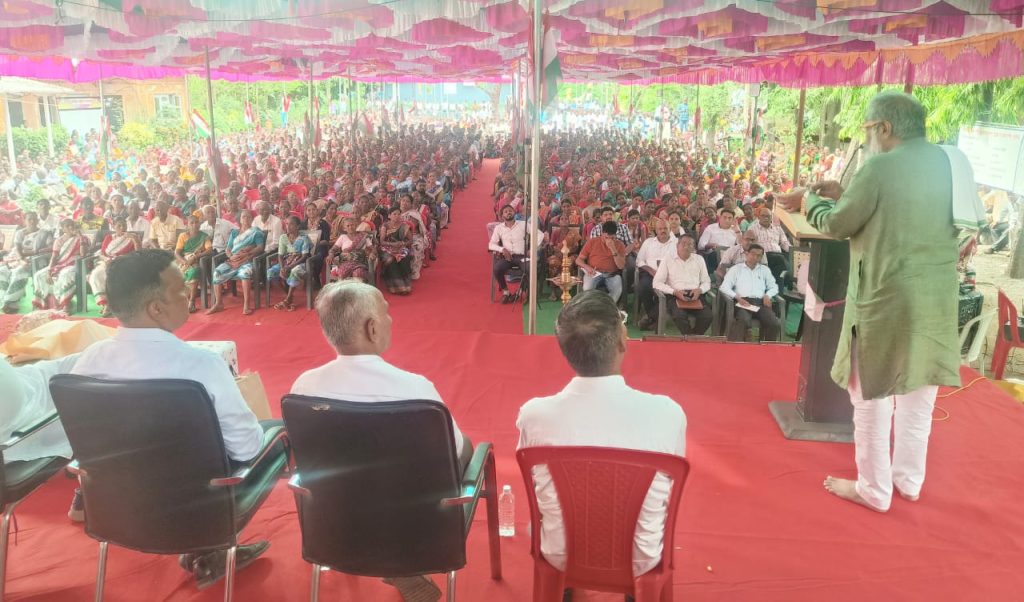
The event was attended by a large number of officials and staff from the district administration, Shramjeevi Sanghatana, Agriculture Department, Rural Development Department, Social Forestry, and Forest Department.
The next phases of the Bamboo Mission program in Palghar district are scheduled for May 17, 18, and 19 in Wada, Vikramgad, Dahanu, Talasari, Mokhada, and Jawhar talukas.