
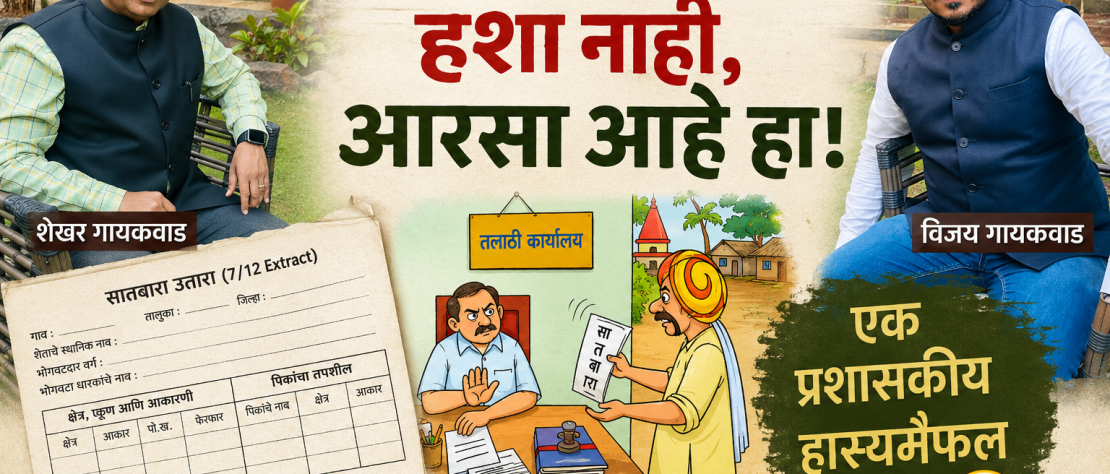
That clerk endlessly searching for a file number, the scorching summer wind outside the window, and the officer inside — whose mastery of saying “come back tomorrow” is unmatched — this is a scene every Maharashtrian has witnessed, in some village, in some taluka office. But the person inside that picture, his turmoil, his logic, his humour, and his helplessness — that is rarely seen by anyone.
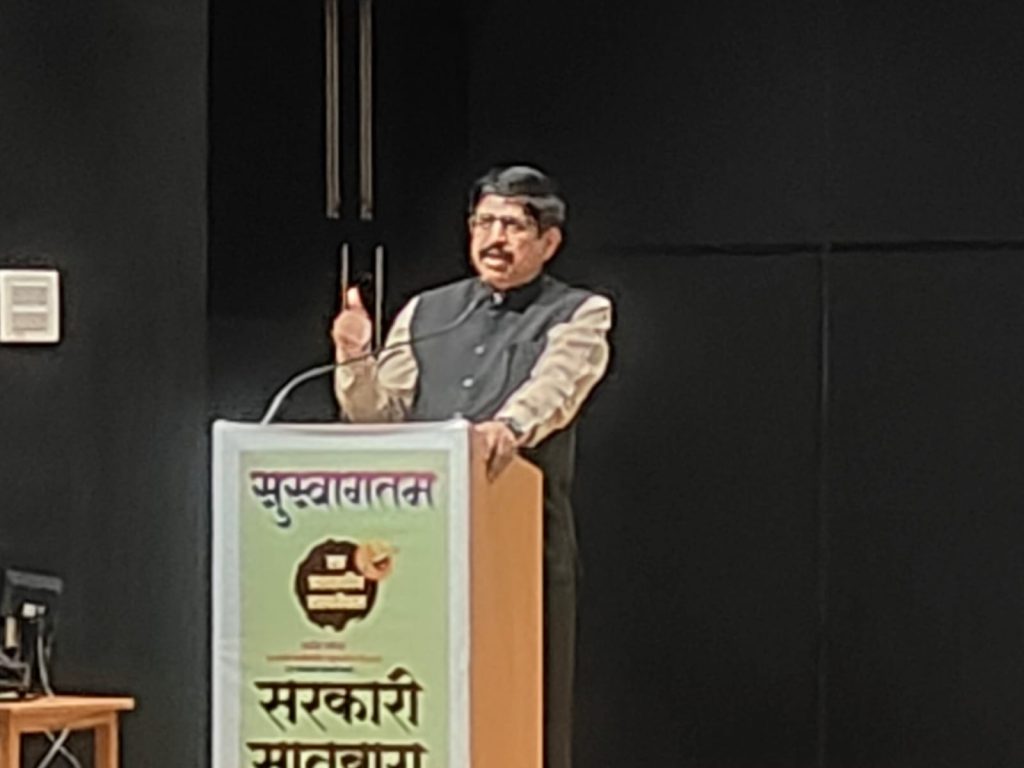
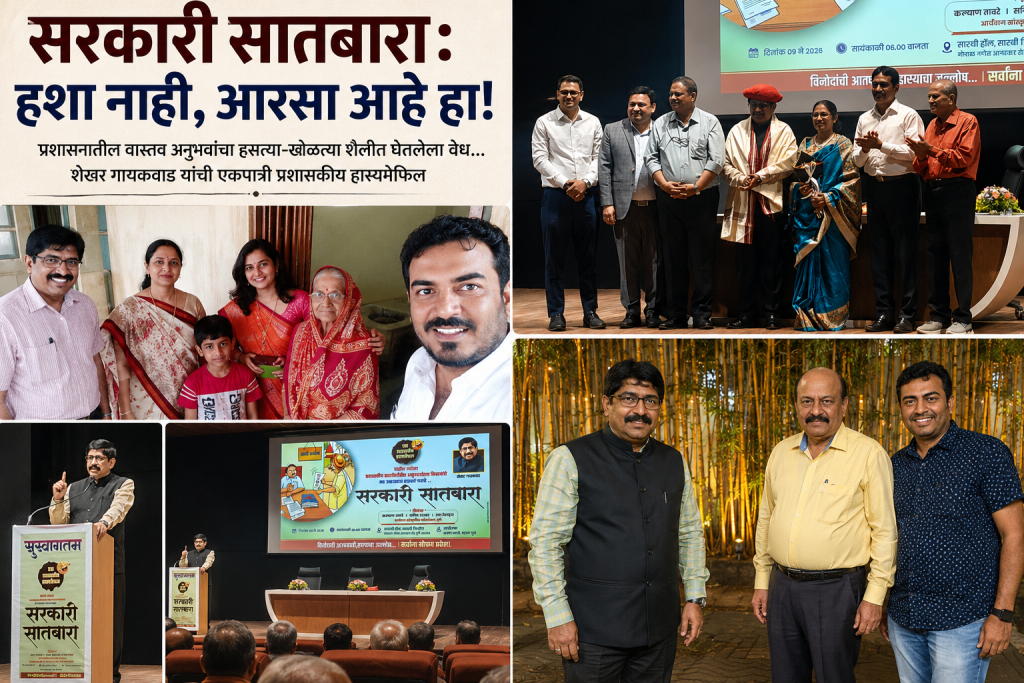
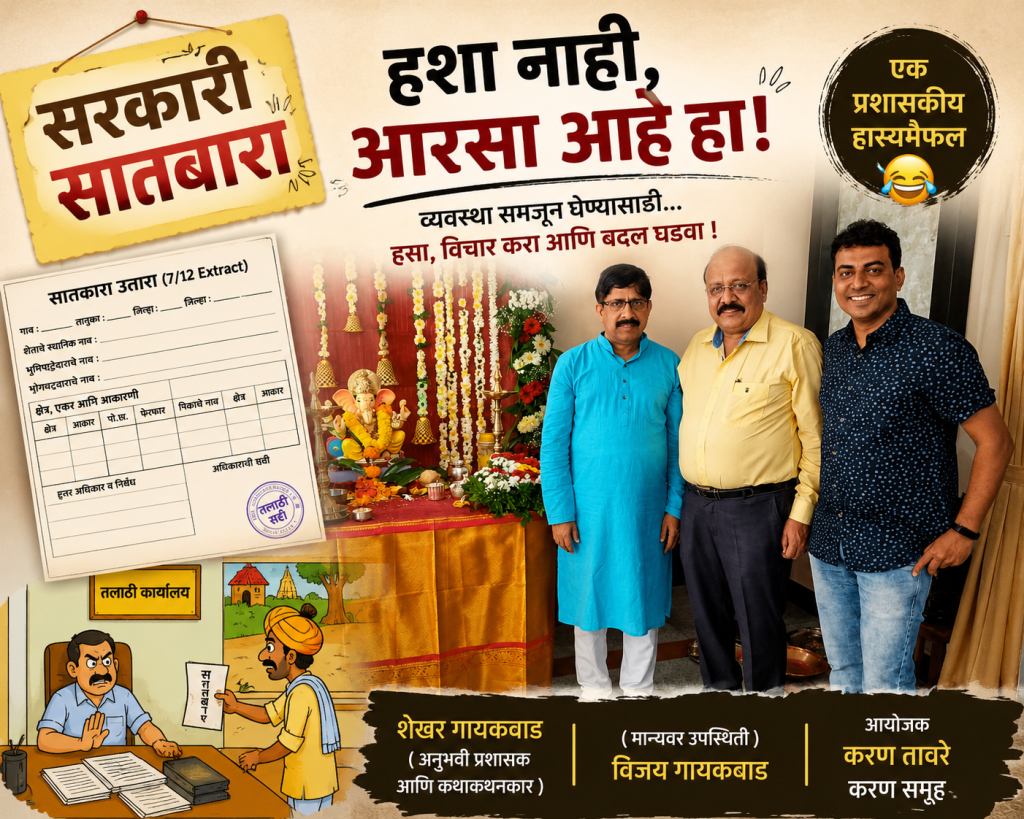
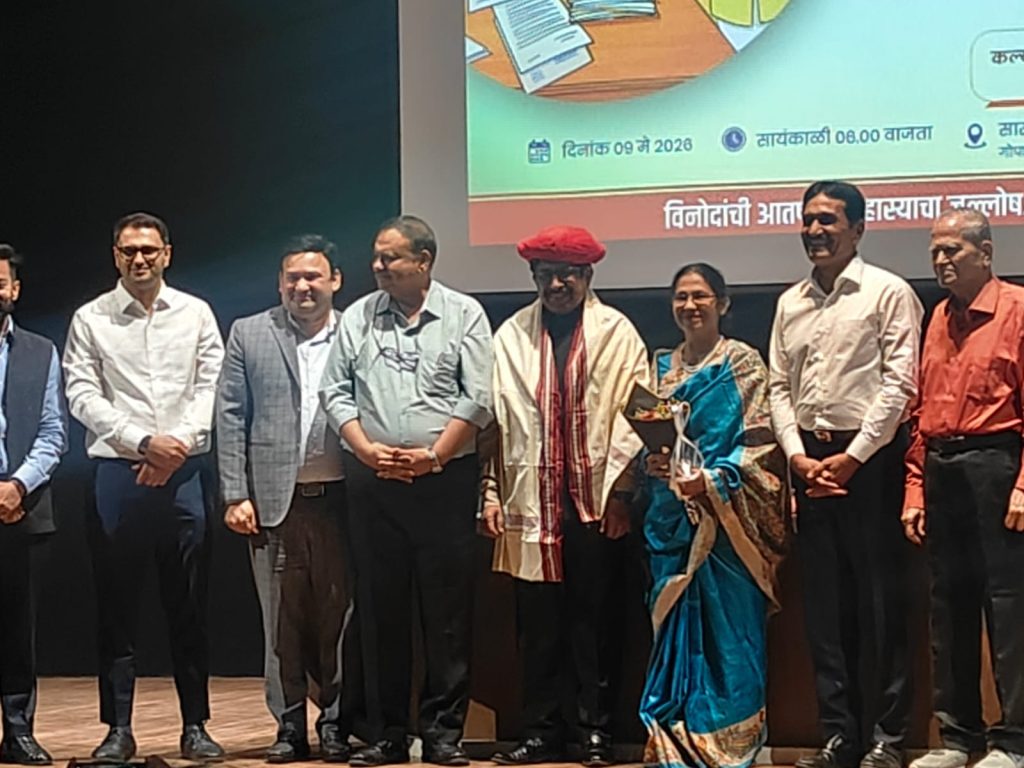
On the evening of May 9, 2026, at Pune’s Sarthi Hall, Shekhar Gaikwad unveiled exactly that inner world. Through his one-man administrative comedy show Sarkari Satbara — and I had the fortune of being there as a witness.
What Makes Sarkari Satbara Different
The name itself says everything. A Satbara is a land record — the document that marks a farmer’s birth and death in the system, the very foundation of government transactions. Add the word Sarkari to it, and you create an irony — one that crores of ordinary citizens live every single day. The essence of this show is hidden right there in its name.
This is not merely a comedy show. In today’s wave of stand-up comedy, many young artists joke about politics, society, and relationships — and they do make you laugh, certainly. But Shekhar Gaikwad’s Sarkari Satbara stands on an entirely different plane. Here, humour is the medium, not the message. The message is — an honest, fearless, and incisive telling of what four decades of administrative service saw, endured, understood, and absorbed.
The Strength of Shekhar Gaikwad’s Storytelling
The name Shekhar Gaikwad is spoken with great respect in Maharashtra’s administrative circles — a seasoned IAS officer who served at senior levels of the Maharashtra government for many years. But when he steps onto the stage, there is no pomp, no carefully maintained wall of dignified prestige. He speaks — and that language feels like your neighbour’s, like the village sarpanch’s, like something lifted directly from the taluka mamlatdar’s office.
The strength of his narration lies in the density of lived experience. When he takes on the role of an officer in a story, he becomes that officer. When he shows the eyes of a petitioner, he becomes that ordinary man. This transformation happens so effortlessly that the audience is pulled right inside — they laugh, but within that laughter there is a familiar ache. Because they have lived this.
His timing is impeccable. He delivers the comic punch at precisely the right moment — just as the audience is absorbing the gravity of a situation, a light, oblique word arrives and the entire hall erupts in laughter. But this laughter is not hollow. It carries a shared experience — we are all part of this system, whether we are the officer or the applicant.
The Reality of Administration Revealed Through Anecdotes
The stories he tells are not mere entertainment. Each one has layers — of people, of systems, of time, and of circumstance.
In one scene, he describes an elderly farmer arriving at the taluka office — a bundle of papers in hand, a turban on his head, hope in his eyes. His application travels through three windows. At the third, he is told: “This falls under window four.” And window four is closed that day. The hall erupts in laughter — but inside that laughter is a long, heavy breath. Because every one of us has lived this.
In another scene, he lays bare the file culture within decision-making. How a file moves, how many tables it visits, how many signatures it requires — and by the time the decision finally arrives, the very context has changed. As he narrates this, he mocks the system, but there is a subtle, quiet sorrow on his face. That is the mark of someone who truly knows it — and is, therefore, all the more wounded by it.
Political pressure, phone calls from elected representatives, the helplessness of the ordinary citizen, the power games at the local level — he portrays all of this not in the language of accusation. He simply tells the story. But what emerges from that story is more powerful than any speech.
Why People Must Watch This Show
In our country, there are only two feelings about administration — fear or frustration. To the ordinary citizen, a government office is an impenetrable fortress where it is simply assumed that your work will not get done. On the other side, officers carry the stamp of being indifferent, corrupt, or insensitive.
Sarkari Satbara stands squarely between these two extremes. Here, the officer is also human — stressed, sometimes confused, sometimes laughing, sometimes making mistakes. And the citizen is not merely “the public” — they are a living individual with their own logic, fears, and expectations.
Watching this show means forging a new relationship with administration — not to gather information, but to understand. And the dialogue born from understanding does not come from fear; it comes from knowledge.
Students, youth, elected representatives, journalists, social workers — everyone should watch this show. Because explaining the system we live in — with laughter, with lightness — is not merely the work of an artist. It is an act of responsibility. And Shekhar Gaikwad does it wholeheartedly.
A Closing Thought That Stays With You
As people stepped out of Sarthi Hall, some were still talking to each other. One person said — “That’s exactly how it is, we just never knew it looked like this.” Another said — “We knew, but we’d never seen it this way.”
That is the true achievement of Sarkari Satbara.
Humour is a mirror — and the alchemy of making an audience see themselves in that mirror, laugh, and think — all in the same moment — is what Shekhar Gaikwad has accomplished here. A Satbara is not merely a land record — it is the record of a human being’s existence within the state. And Sarkari Satbara is the living, laughing, thought-provoking story of that record — and that person.
— Vijay Gaikwad