
Malaysia reports a 40% jump in palm oil exports to India; over 200 foreign delegates attend; sideline deals could reach $3 billion
By Vijay Gaikwad
Mumbai, 30 September 2026 — The 29th edition of Globoil India opened in Mumbai on Wednesday. It brought ministers, trade envoys and senior agribusiness executives from across the world together at a time when geopolitical conflict, volatile supply chains and stricter sustainability rules are reshaping the global edible oil trade.
The conference is organised by Tefla’s under the theme “At The Inflection Point: Energy, Sustainability & India’s Demand Future,” and has become one of the international vegetable oil industry’s most important annual meetings.
Opening the proceedings, Aadil Singh, Managing Director of Tefla’s, looked back on the forum’s growth over nearly three decades. He said the event began 29 years ago with modest international participation. It now draws global attention, as digital tools and a new generation of leaders take charge of trading desks.
A difficult trade backdrop
Industry leaders said 2026 has been far more complex than expected. The prolonged conflict in Eastern Europe and continuing instability in the Middle East are disrupting energy routes and shipping corridors. This is pushing up freight and input costs for import-dependent developing economies. Weather has added to the strain: El Niño and erratic monsoon and rainfall patterns across Southeast Asia and Latin America are testing crop yields.
Malaysia: India remains our top market
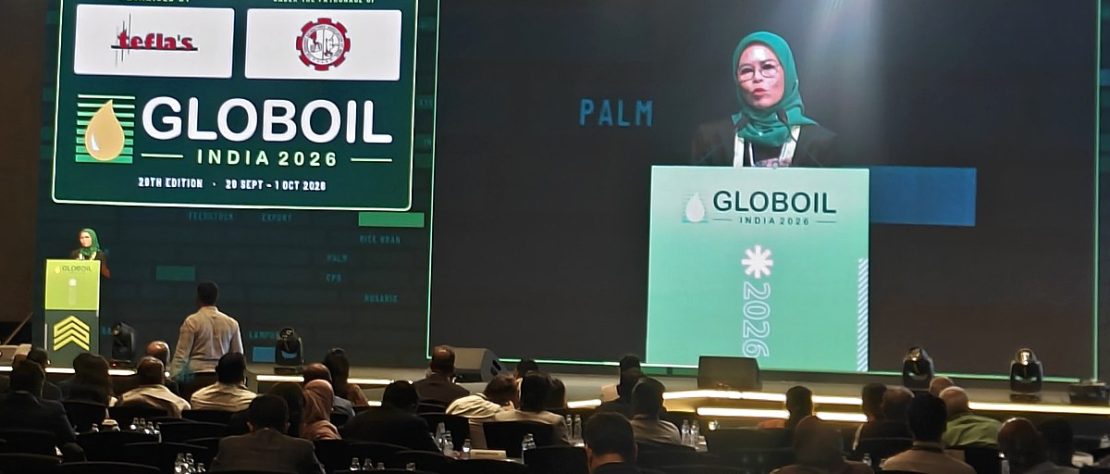
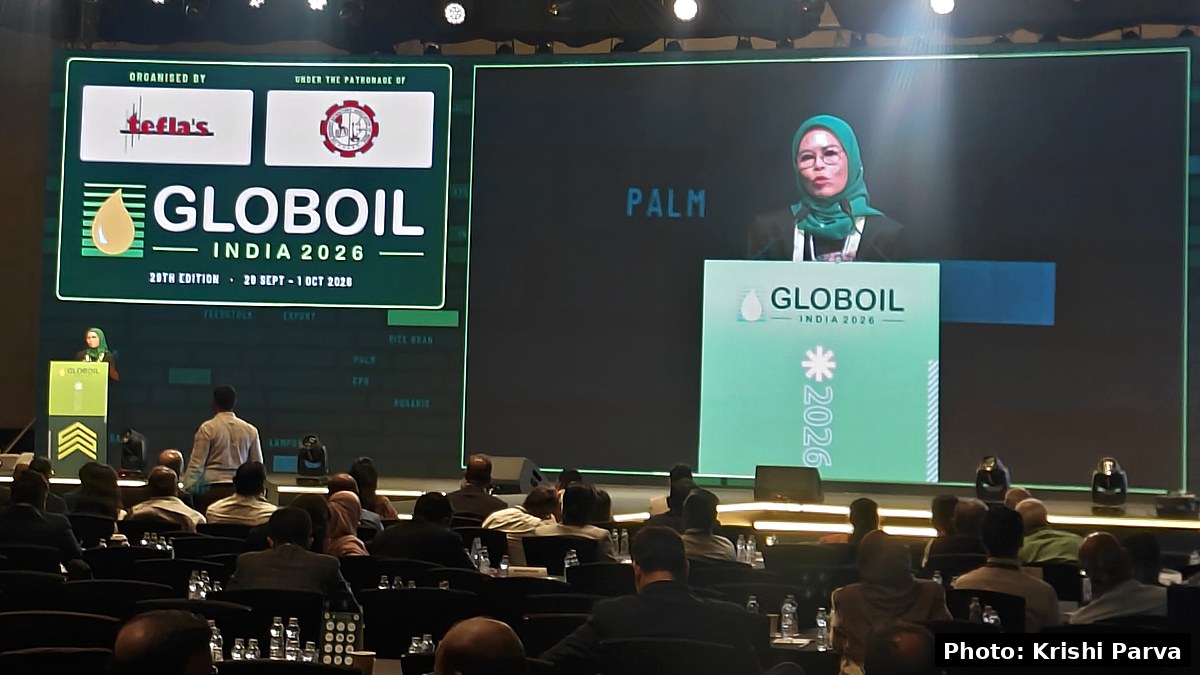
The keynote address came from YB Datuk Seri Dr. Noraini binti Ahmad, Malaysia’s Minister of Plantation and Commodities. She described the long-standing bilateral partnership between the two countries and said India remains Malaysia’s largest export destination for palm oil. Malaysian palm oil exports to India crossed 2.26 million tonnes in the first eight months of 2026, a 40 per cent rise over the same period last year.
The minister reaffirmed Malaysia’s push towards mandatory Malaysian Sustainable Palm Oil (MSPO) certification and traceability. She also proposed value-added partnerships with India in oleochemicals and specialty fats, in line with India’s long-term food security goals.
She was accompanied by representatives of the Malaysian Palm Oil Council, the Malaysian Palm Oil Board and the MSPO body. Ms. Kausar Singh, Director at Tefla’s, escorted her to the stage.
India’s import basket anchors global prices
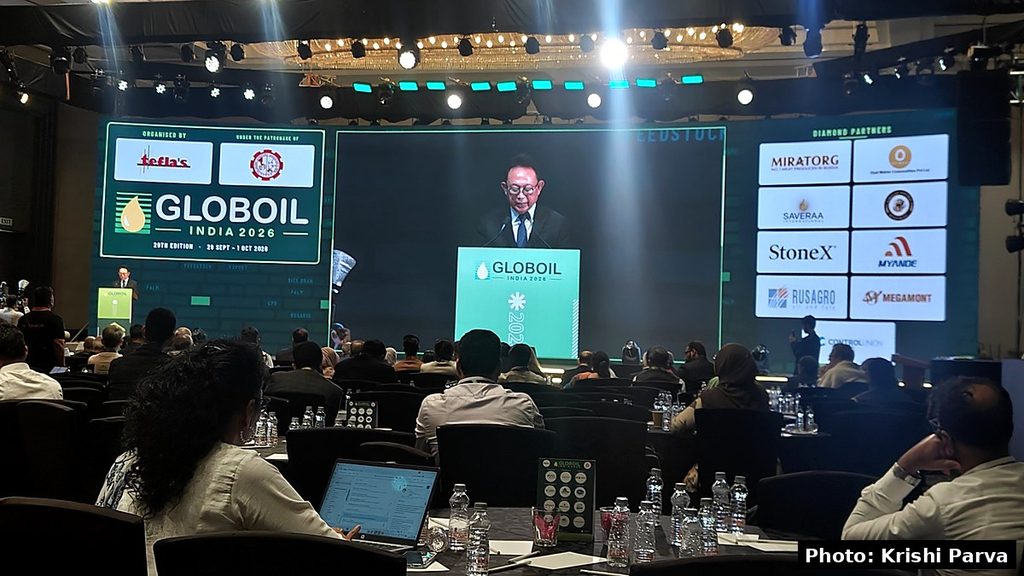
Sandeep Bajoria, CEO of Sunvin Group, highlighted how global the forum is. He said more than 200 foreign delegates are attending, from the United States, Argentina, Brazil, Russia, Ukraine, Bulgaria, Moldova, Romania, Indonesia and Thailand.
Bajoria said India imports about 16.5 to 17 million tonnes of edible oil a year, worth roughly $20 billion, and that this domestic demand anchors world prices. He estimated that business deals on the sidelines of the conference could reach $3 billion.
Move from spot buying to structured partnerships
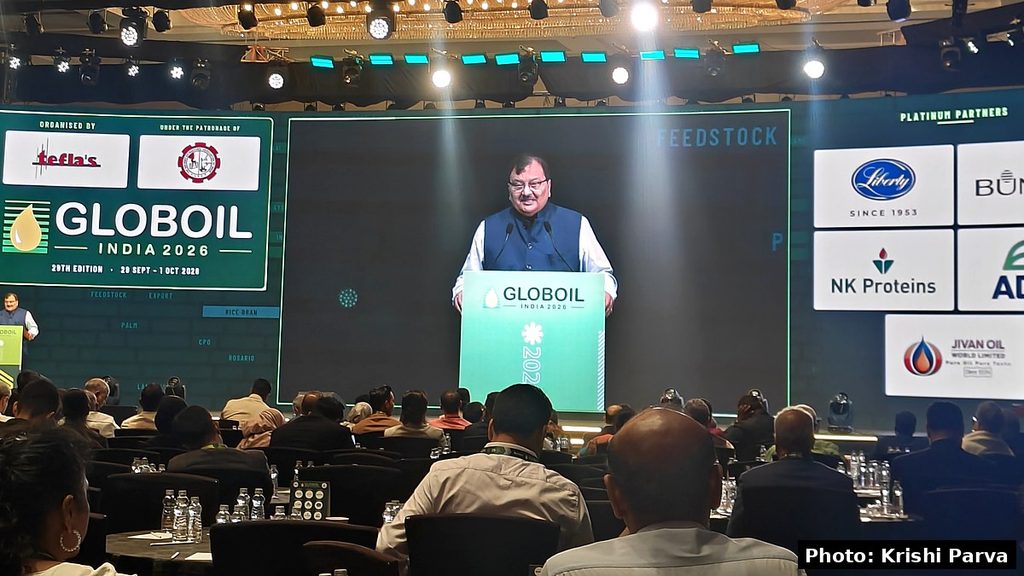
Sanjeev Asthana, CEO of Patanjali Foods Limited, spoke about India’s growing consumer market and changing consumption patterns. He noted that India’s imports of pulses, nuts and edible oils together are worth nearly $45 billion. That scale, he said, calls for stronger policy coordination and long-term structured partnerships rather than routine spot purchases.
Producers seek partnership beyond trade
Mdm. Izzana Salleh, Secretary-General of the Council of Palm Oil Producing Countries (CPOPC), put forward the producers’ view of the relationship. “India is much more than an export destination for palm oil producing countries,” she said. “It is a partner in our shared pursuit of food security, resilient supply chains, productive farmers and sustainable growth.”
On the dais
The inaugural dais also included:
Atul Chaturvedi, Chairman, Asian Palm Oil Alliance
Dr. B.V. Mehta, Executive Director, Solvent Extractors’ Association of India (SEA)
Anshu Malik, President, SEA
Eddy Martono, Chairman, GAPKI (Indonesian Palm Oil Association)
H.E. Ms. Dyah Roro Esti Widya Putri, Vice Minister of Trade, Indonesia
What lies ahead
Over the next three days, panels will discuss the growing overlap of food and fuel through biodiesel mandates, environmental rules such as the EU Deforestation Regulation (EUDR), and price outlooks for palm, soybean and sunflower oils.
For Indian oilseed farmers, these discussions matter directly. Global prices, import volumes and duty decisions shaped at forums like Globoil ultimately decide the price they get for soybean, groundnut and mustard at the mandi.
Suggested tags: Globoil India 2026, Edible Oil, Palm Oil, Malaysia, India Trade, Oilseeds, Food Security
Meta description: Globoil India 2026 opens in Mumbai amid war, weather and sustainability pressures, as Malaysia reports a 40% jump in palm oil exports to India.